RIX FM Festival / Swedens largest music event
Full-Spectrum Brand Identity for Sweden’s Largest Music Festival
As Sweden’s largest music festival, RIX FM Festival needed a visual identity as bold, energetic, and wide-reaching as the event itself.
I was brought on, while keeping the pre-exisiting logo, to redefine, update and implement the brand—from strategic guidelines to the execution of every visual touchpoint. The scope spanned everything from high-volume social media content to large-format print, nation wide advertising, and immersive stage decor.
This project was carried out for Nordic Entertainment Group.
My role
Art direction
Visual identity
Graphic design
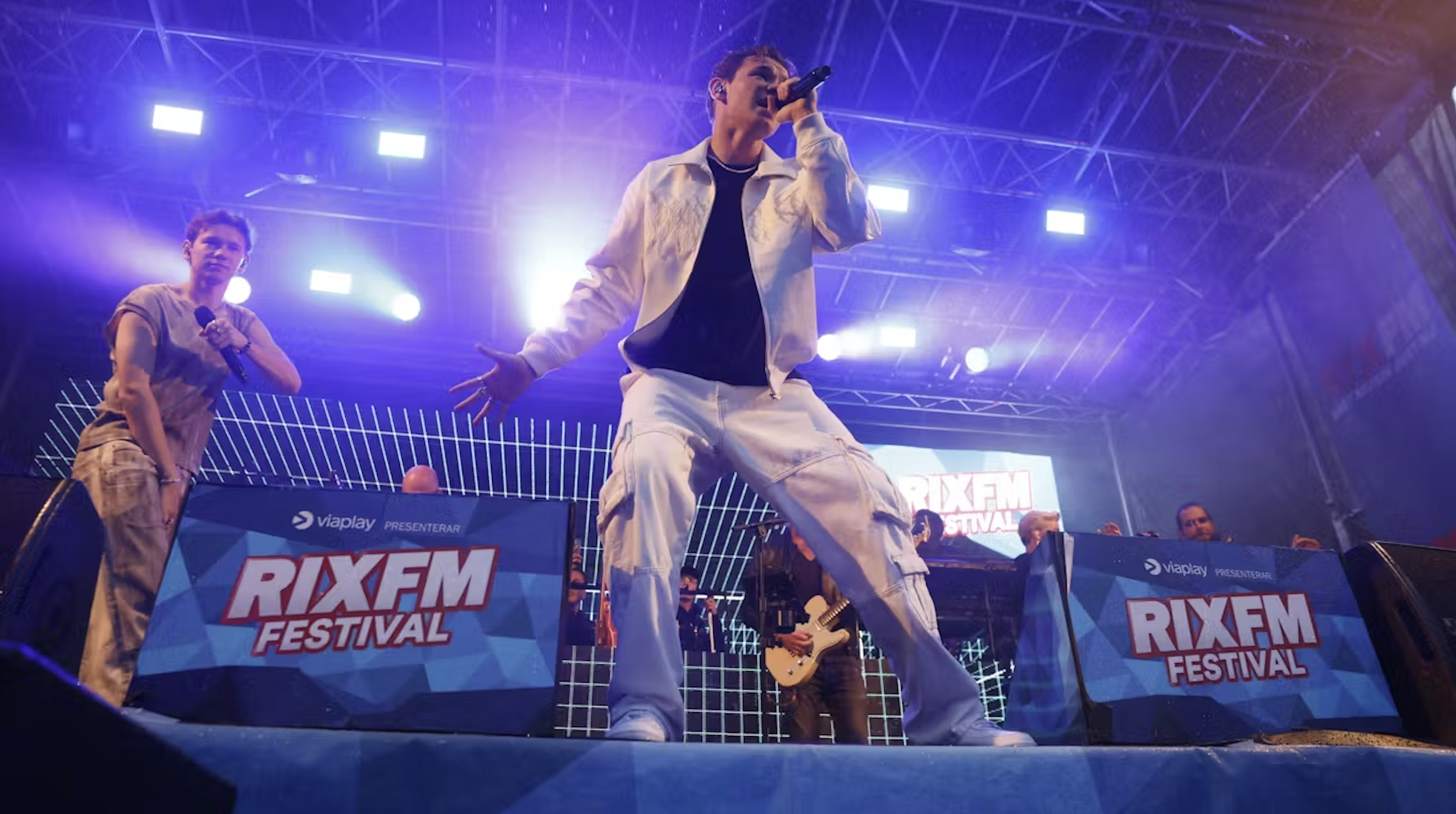
How do you build a bold, cohesive identity that captures the energy of a live music festival—across every touchpoint, platform, and city in Sweden?
Where we started
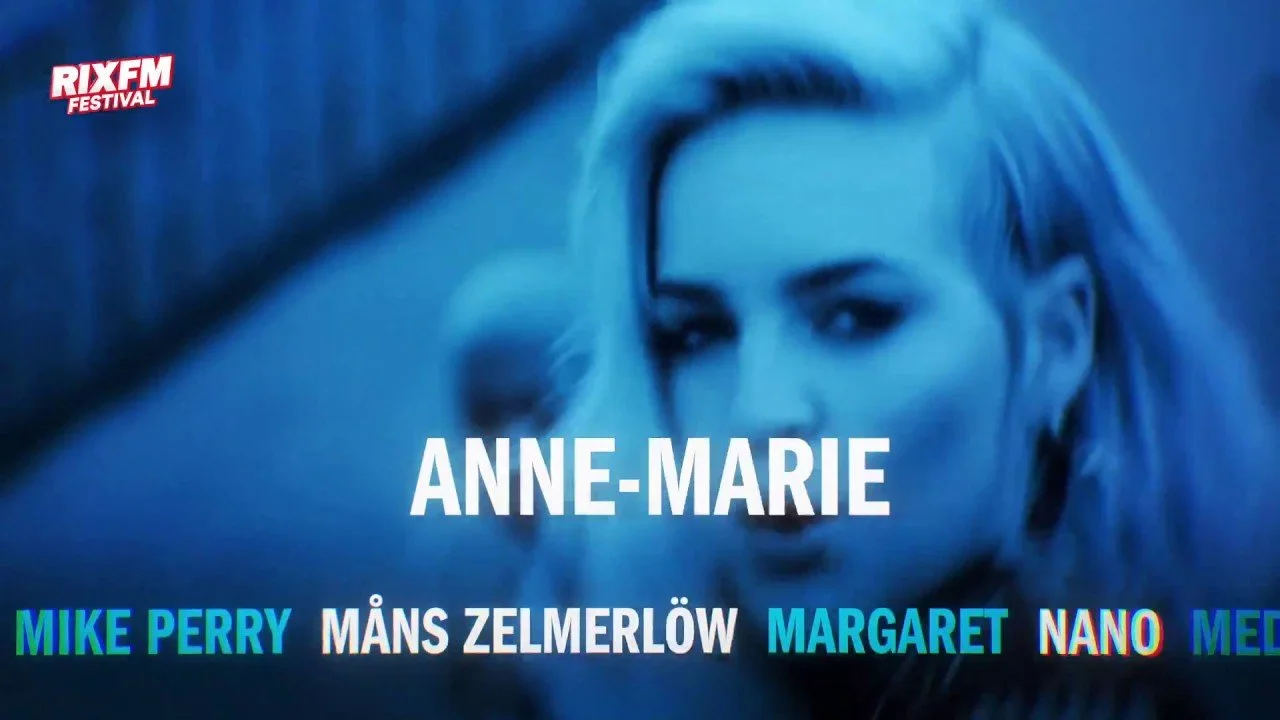
RIX FM Festival was already a household name in Sweden — a beloved, high-energy summer institution that toured the country every year. The brand recognition was strong, but the visual identity had plateaued. The 2018 version of the festival relied on a flat design approach and a uniform blue filter applied across all artist imagery to create cohesion. It worked as a system, but it came at a cost: the artists themselves — the entire reason people showed up — were disappearing behind it. Their individuality, their energy, their visual identities were being flattened into a single, forgettable tone.
That was the core tension to resolve. How do you create a cohesive festival identity without erasing the very thing the festival is built around?
The Brief
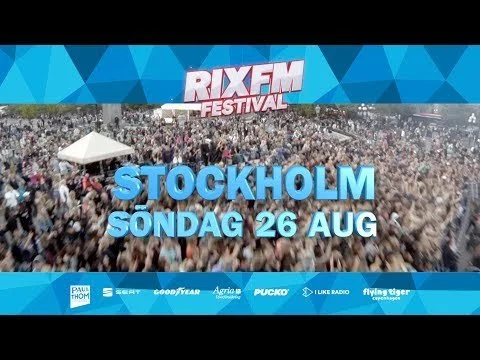
Nordic Entertainment Group brought me in to redefine and evolve the RIX FM Festival brand — not to reinvent it. The logo would stay. The core colours scheme should remain. The task was to elevate and expand what existed into something more expressive, more dynamic, and more worthy of Sweden's largest music event.
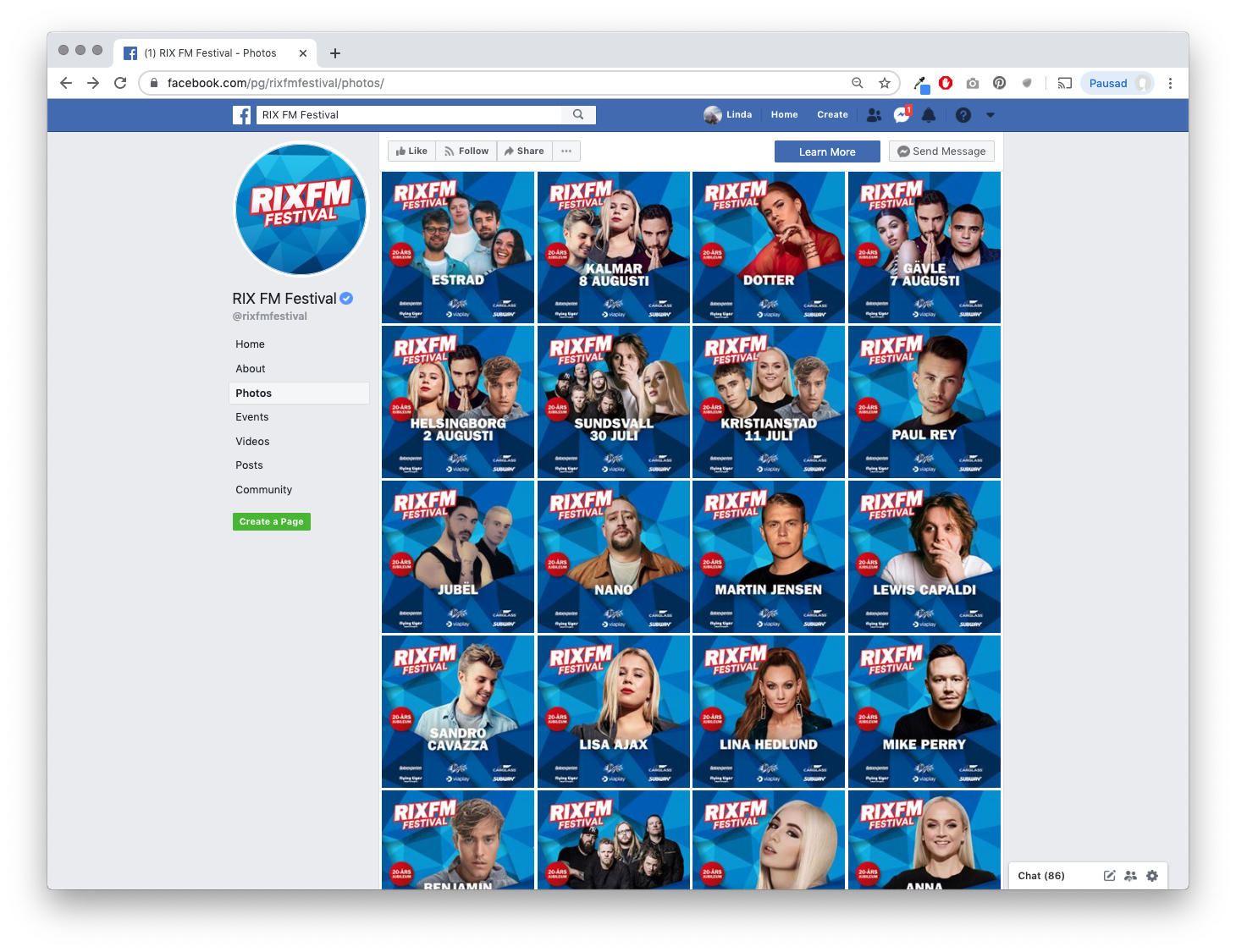
What made this brief particularly demanding was the scale of production it required. Every summer, 20–30 artists were announced across 10 different city combinations, each needing their own individual communication. The full output spanned:
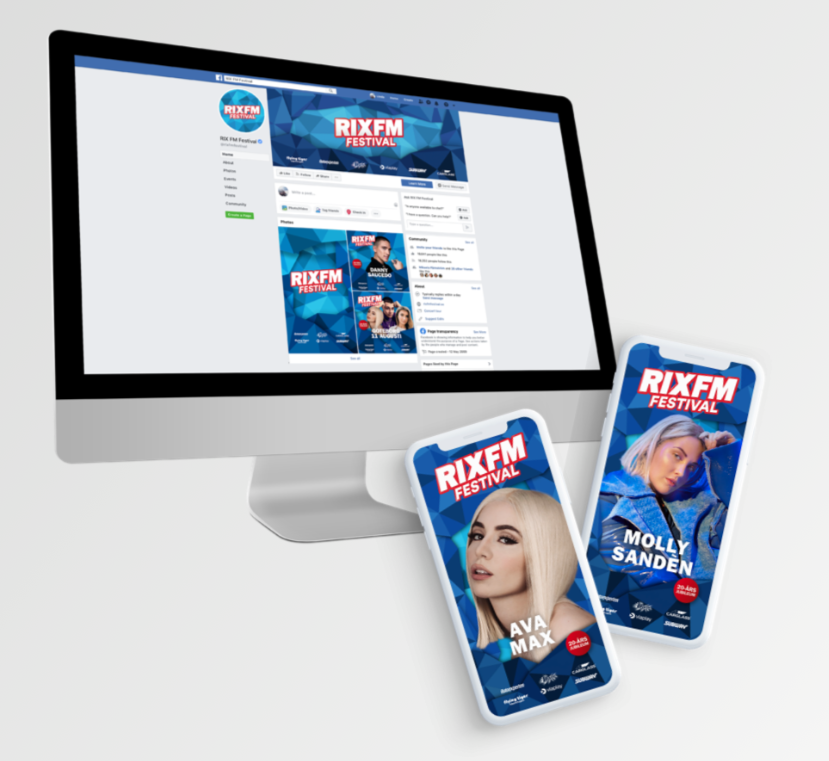
Instagram posts and stories
Facebook posts
Website assets
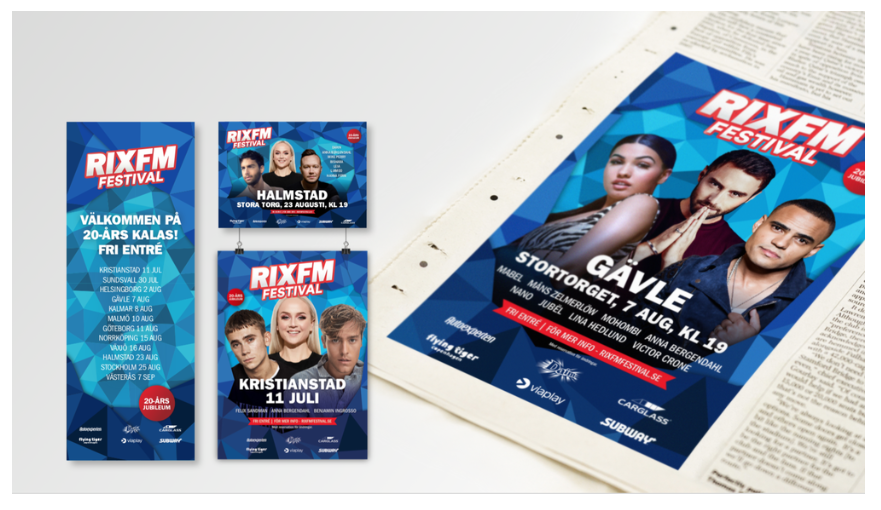
Newspaper and digital advertisements
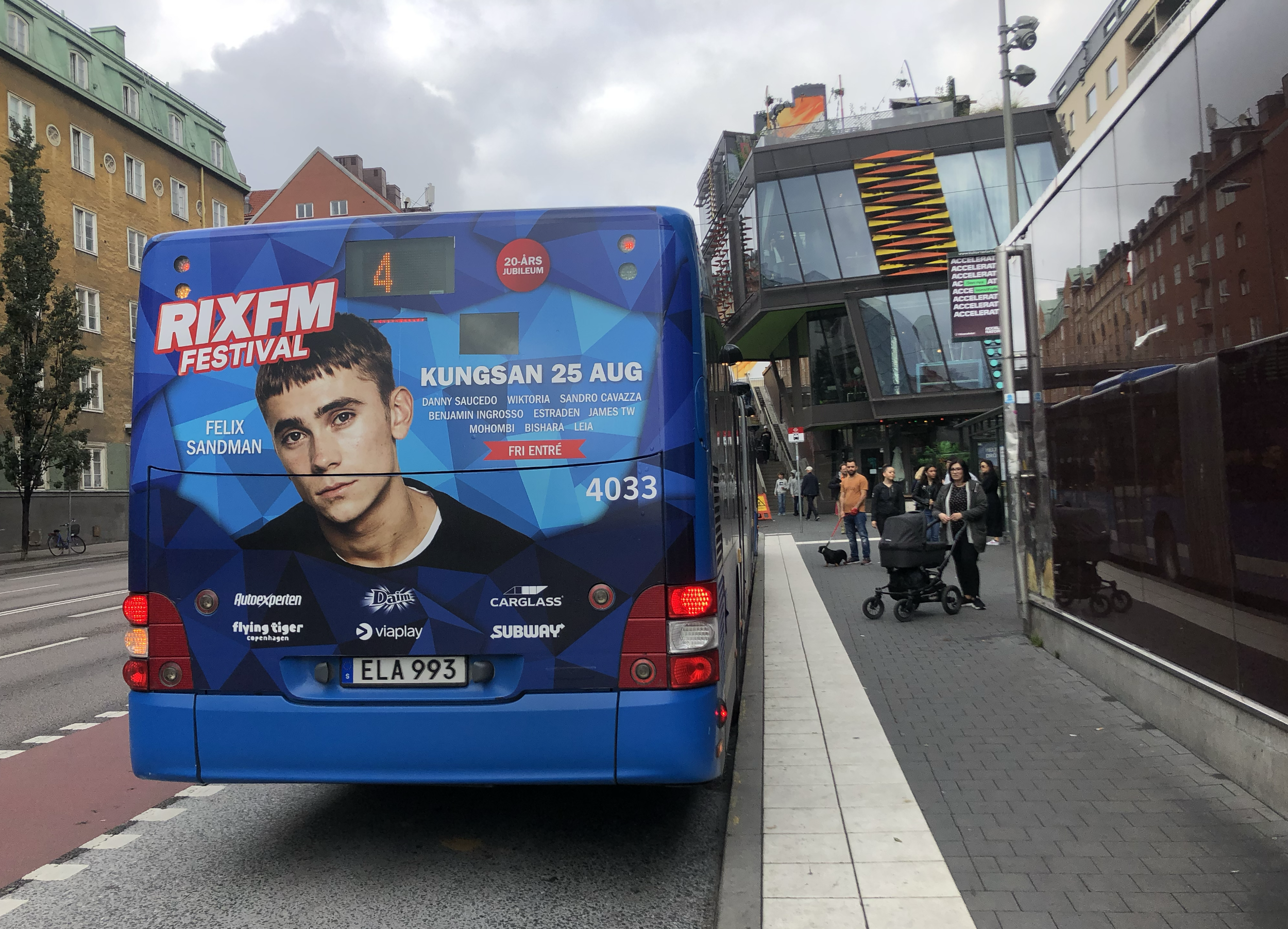
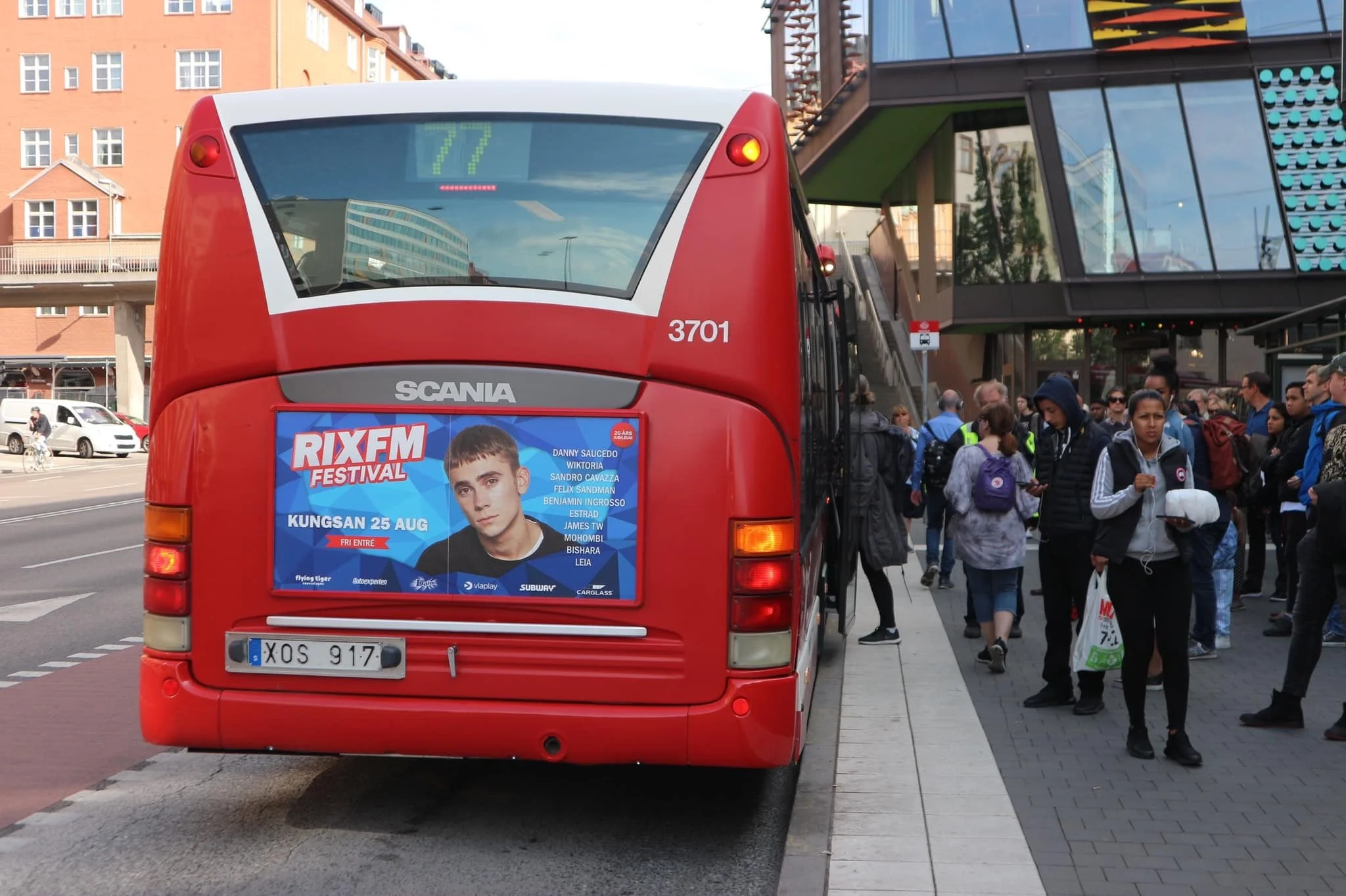
Bus rear panels and large-format outdoor print
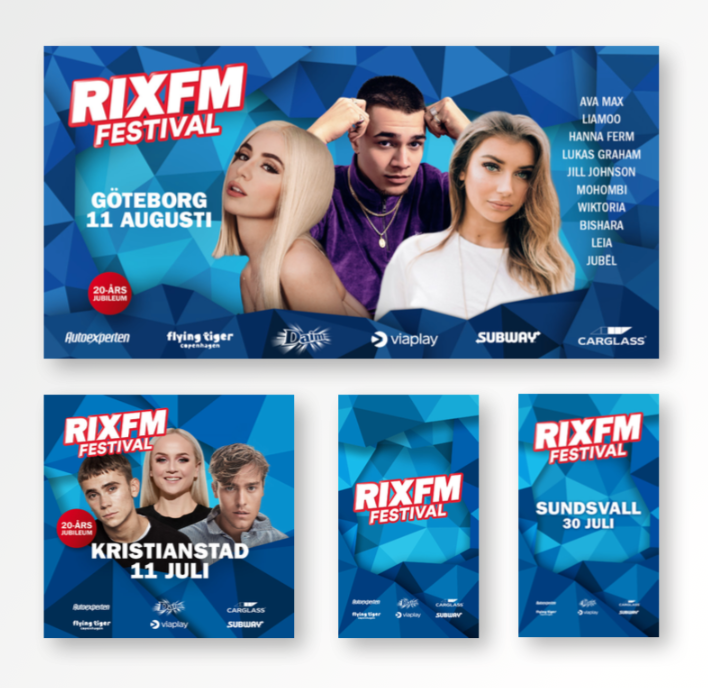
Digital banners across multiple formats
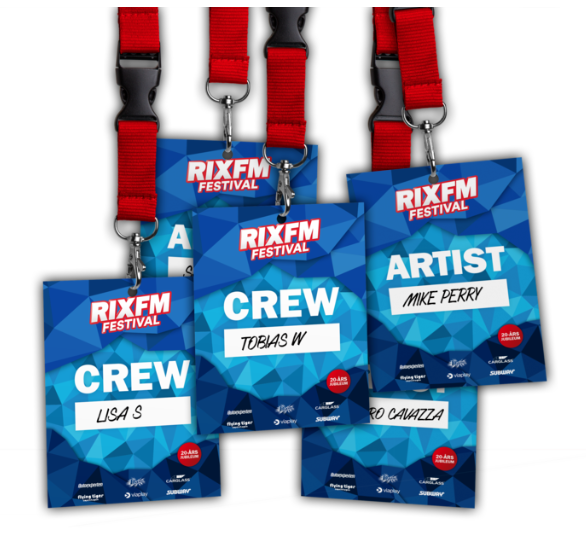
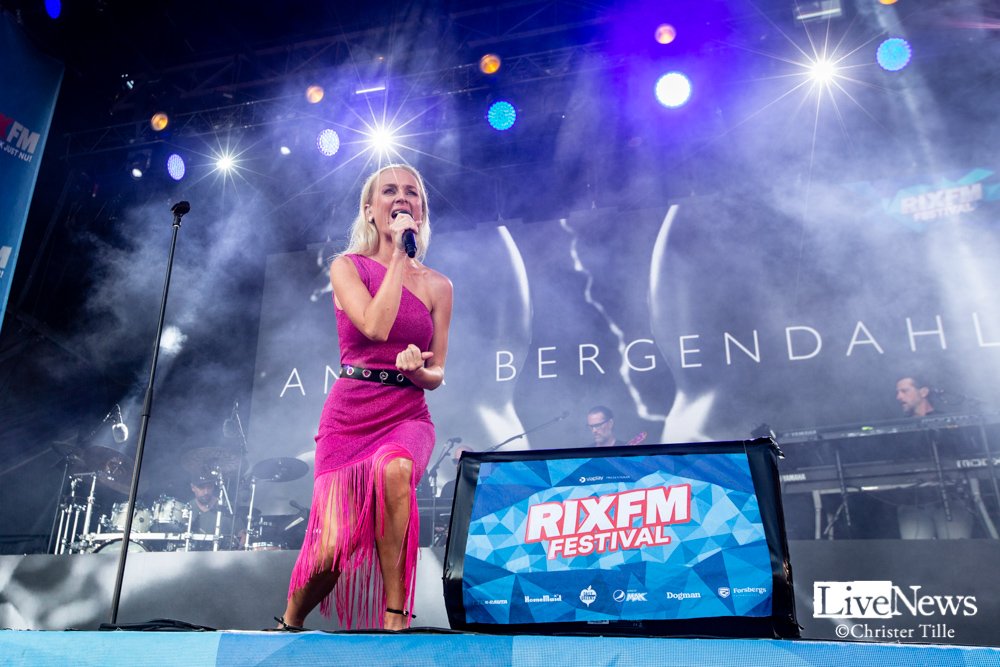
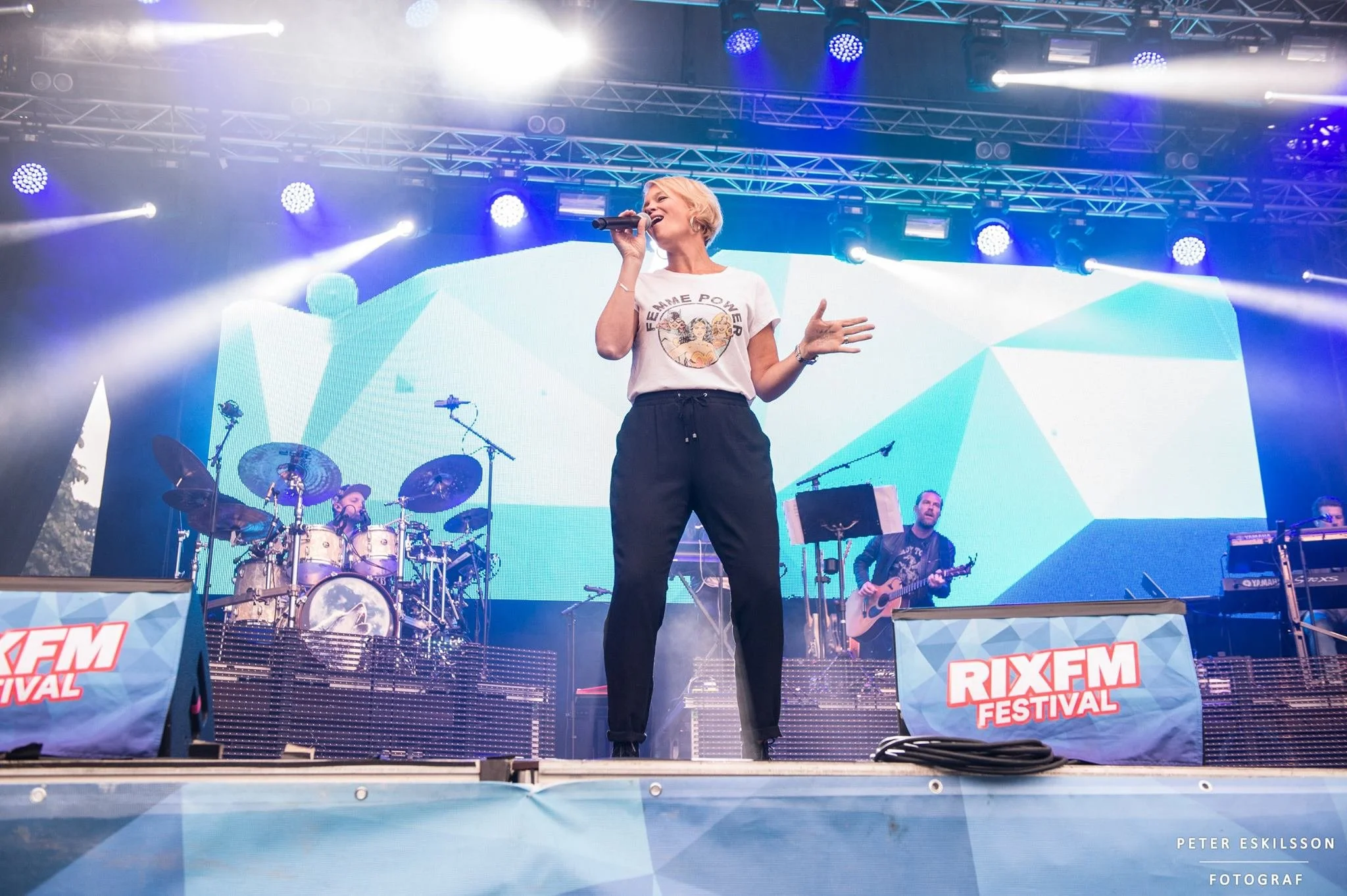
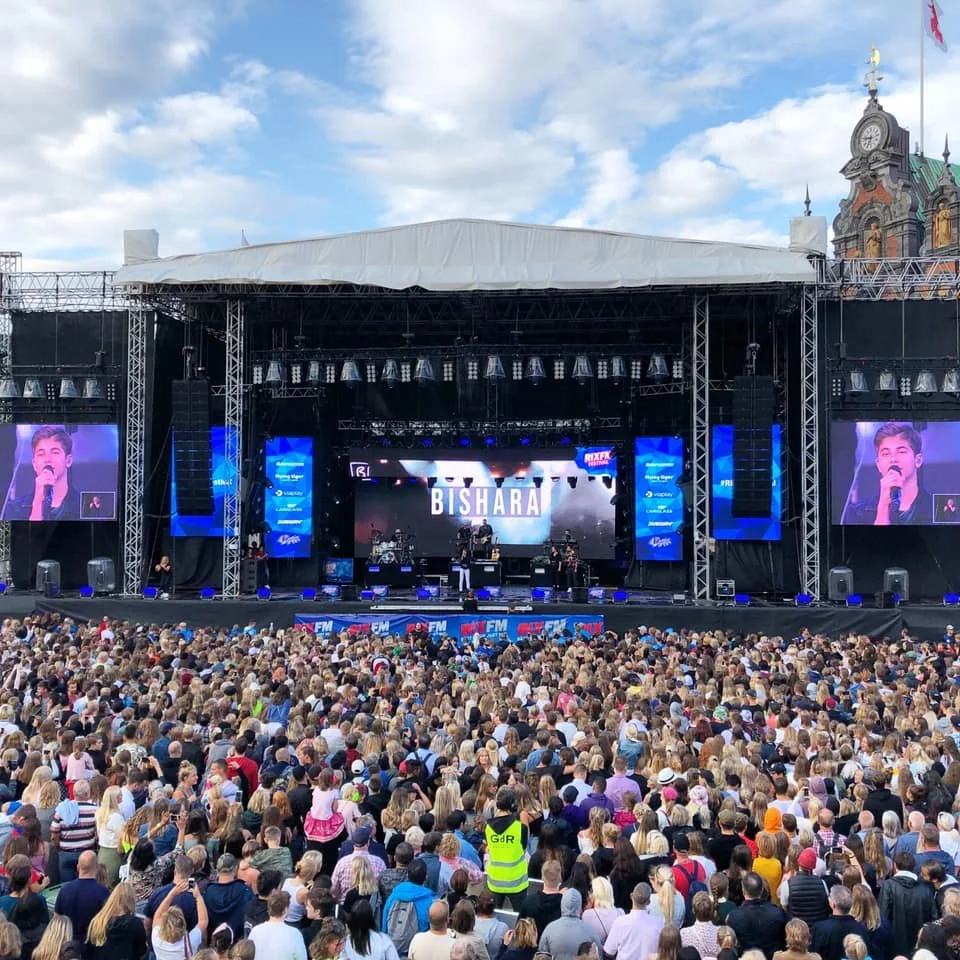
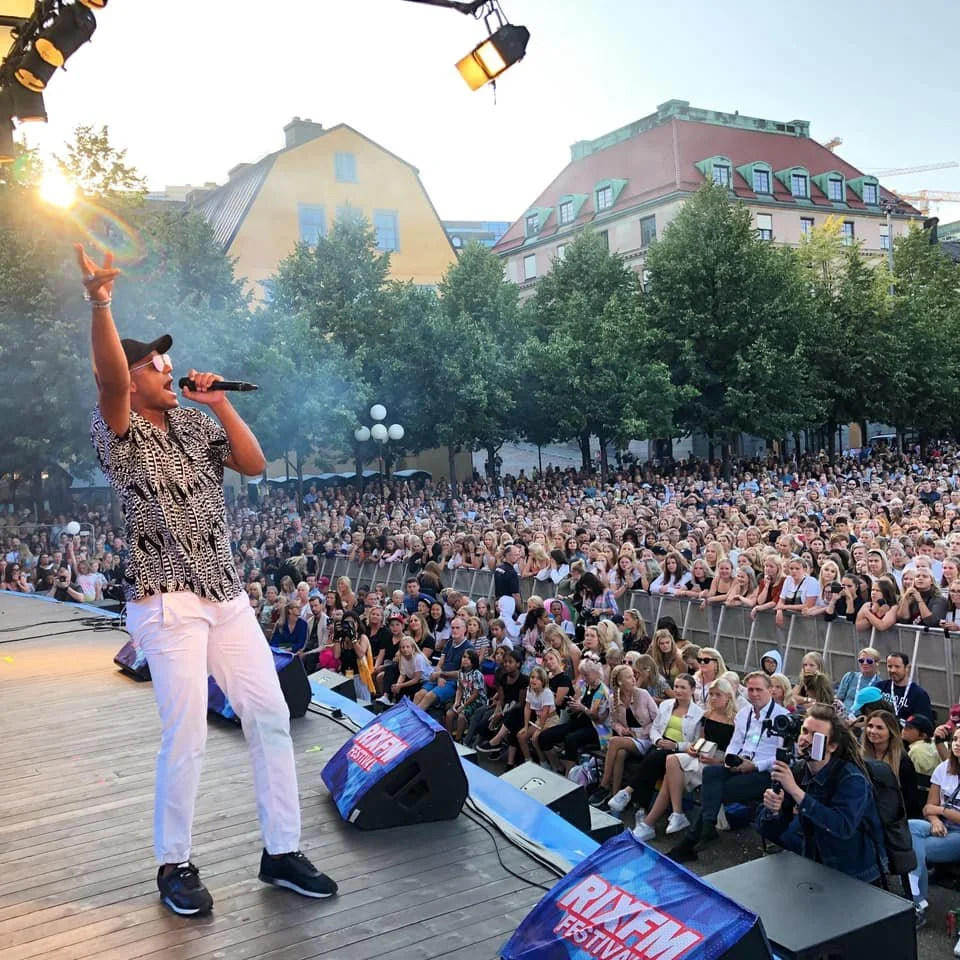
Stage decor and merchandise
All of this produced by one person. Which meant the system didn't just have to look good — it had to be fast, flexible, and foolproof at volume.
Designing for scale
Perhaps the most demanding aspect of this project was not the creative direction — it was the production reality behind it. Ten cities. Up to thirty artists. Multiple format combinations per artist per city. All executed by a single designer, across a six-month production window every year.
The identity system had to function as a design machine: a flexible but tightly defined set of rules and templates that could produce a high volume of on-brand assets without compromising quality or requiring creative decisions to be made from scratch each time. Every template was built so that dropping in a new artist image and name would produce a finished, publish-ready asset. The system did the heavy lifting — I focused on the direction.
This is what separates a strong visual identity from a beautiful one. It has to perform under pressure, at volume, across formats ranging from a phone screen to a stage backdrop visible from fifty metres away. The RIX FM system held together across all of it.
Design Decisions
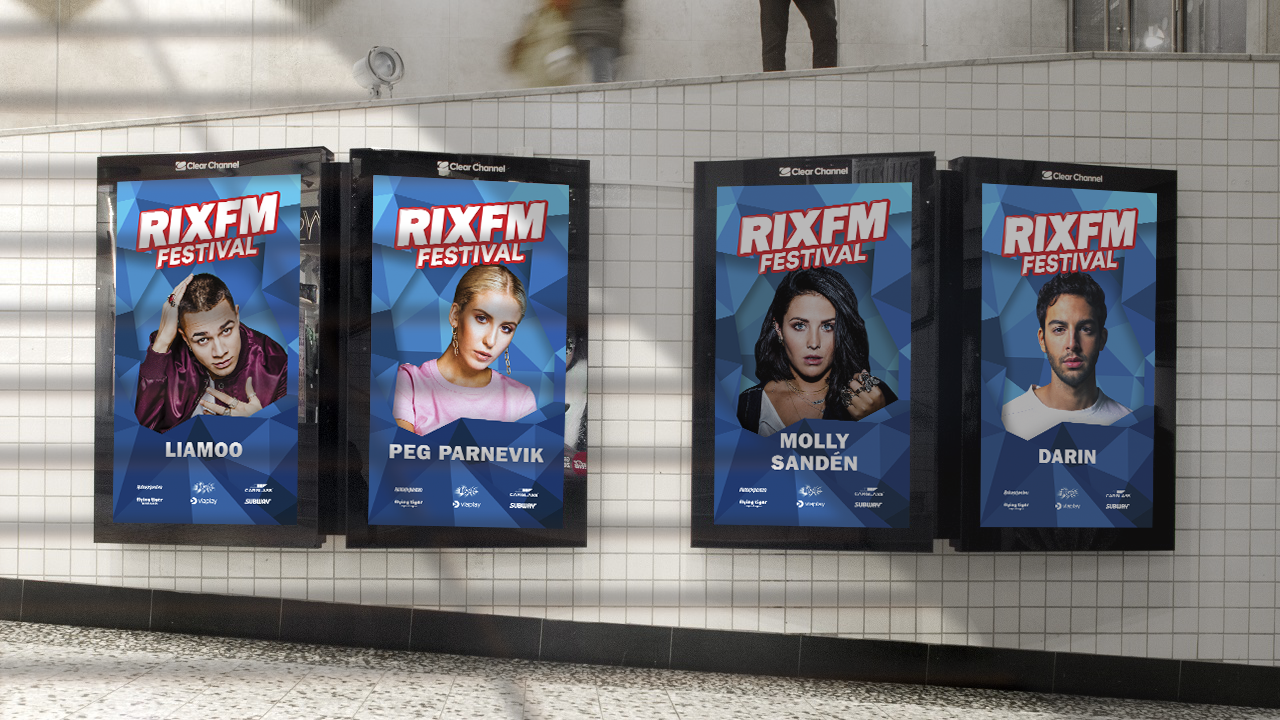
The solution started with letting go of the blue filter that was currently dominating the design. Instead of forcing cohesion through a colour overlay that suppressed the artists' own visual identities, I built a system that created cohesion through structure instead: using the existing pattern as a multidimensional stage that each artist could inhabit on their own terms.
The pattern, already part of the RIX FM visual language, was reimagined as an environment rather than a surface. It gave the identity depth and movement — a world the artists could step into rather than be flattened against. Whatever the artist's official agency photo looked like, whatever their colour palette or mood, the system could absorb it and still feel unmistakably RIX FM.
This also solved a practical problem. Artist images arrive from agencies in vastly different styles, shot by different photographers, in different colour temperatures and formats. A system that required heavy retouching or colour grading for every image would have been unmanageable alone. The new identity was designed to work with that variety, not fight against it.
I also designed with animation in mind from the start. The pattern's geometry lent itself naturally to motion, which meant digital formats could come alive without requiring separate creative development for each asset — the same system that worked as a static poster could be easily animated for stories and digital banners.
Proof in longevity
The identity was created in 2019 and it is still in active use today, six summers later, as RIX FM Festival continues to tour Sweden, and long after I left the team.
I find that longevity is the most meaningful outcome of the project. It has survived budget cycles, changing stakeholders, new artists, and shifting digital platforms. It has been applied by others, extended into new formats, and continued to feel relevant year after year. In a landscape where brands refresh constantly, an identity that remains in use for six years is not a coincidence — it is the result of building something with enough flexibility to evolve and enough clarity to endure.