
She Sailor / A Womens Mentorship Program
Investigating Gender Imbalance in the World of Sailing
Me and my team set out to go beyond the headlines—to dig deeper into the underlying causes, hear from those affected, and identify where meaningful change can begin. This project marked the start of a long-term initiative to understand, amplify, and redesign the sailing experience to be more inclusive, from grassroots to elite levels.
Despite sailing being a global sport, deep-rooted gender imbalance remains a major issue — especially for women and girls. According to a 2019 World Sailing Trust survey, 80% of women and 56% of men agree that gender inequality is prevalent in the sport. Respondents cited limited support, discrimination, and a lack of female coaches and role models as persistent barriers.
My Role
Research
Prototyping
UX & UI Design
Brand Design
How can we contribute to the elimination of gender inequality in the sailing world? This is our research driven exploration.
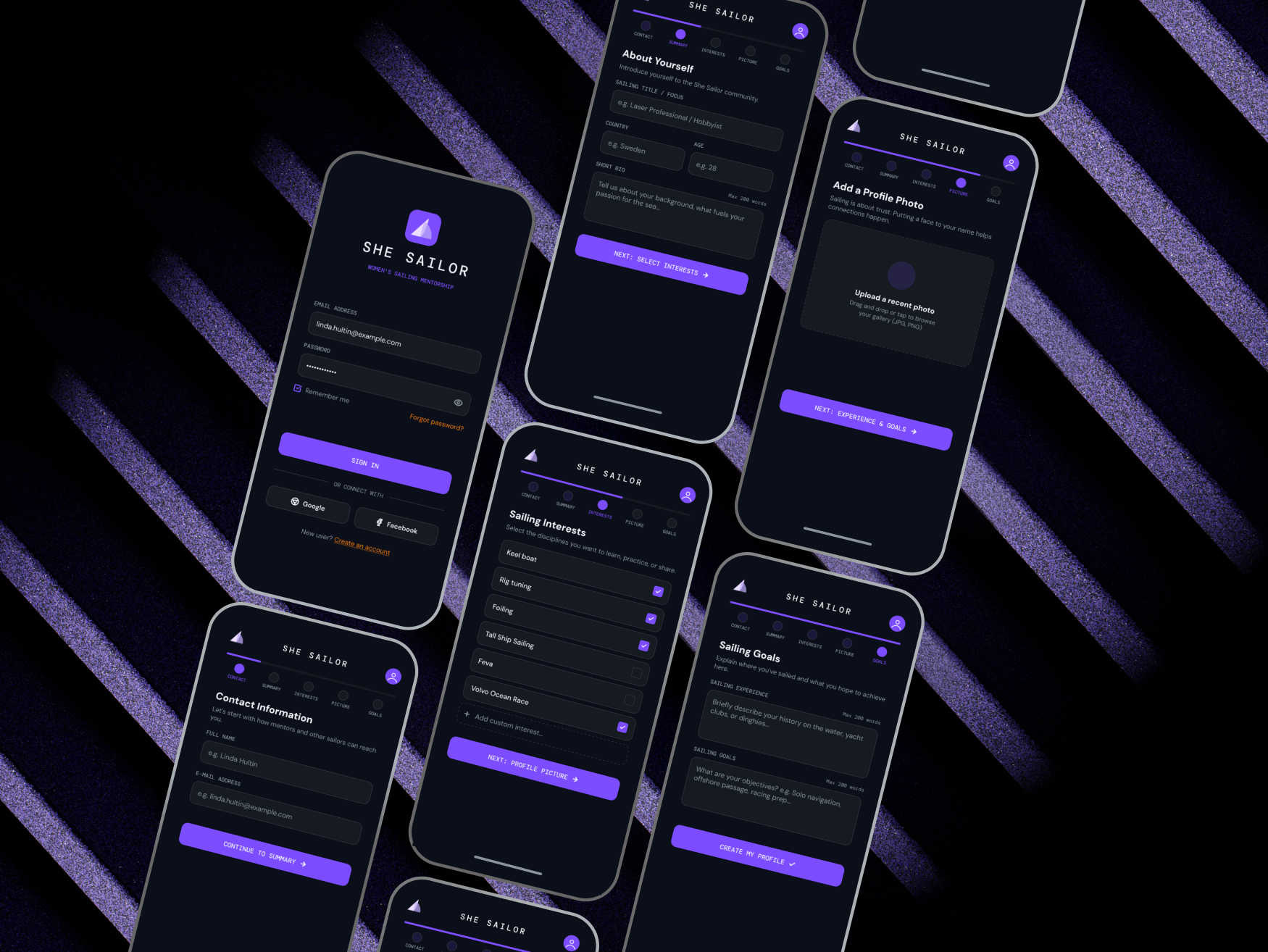
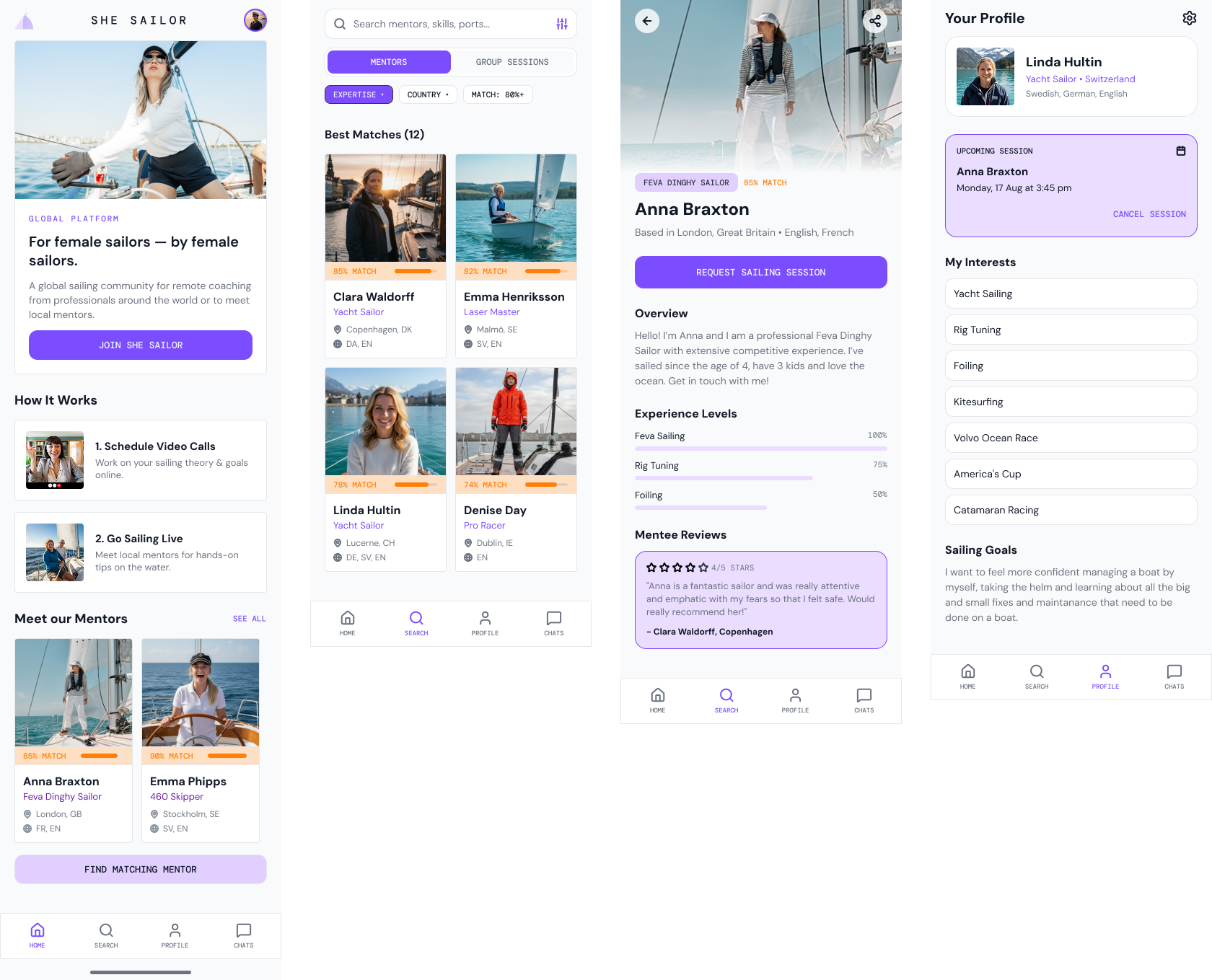
Design processWe created a service meant to pair aspiring female sailors regardless of background with experienced mentors who can help guide to the next steps of whatever sailing challenges they may face. Mentorship can either be in person with hands on practical tips in sailing sessions or by video coaching to enable coaching from professionals all over the world or for working on theoretical skills or goals. The platform is also a place where female sailors can connect, share expriences and talk to each other in group sessions and forums. A service for sailing women – by sailing women.
But how did we reach this conclusion and what did we create?
Research & Ideation
Sketches & Wireframes
Usability testing
Design decisions & UI
Prototype development
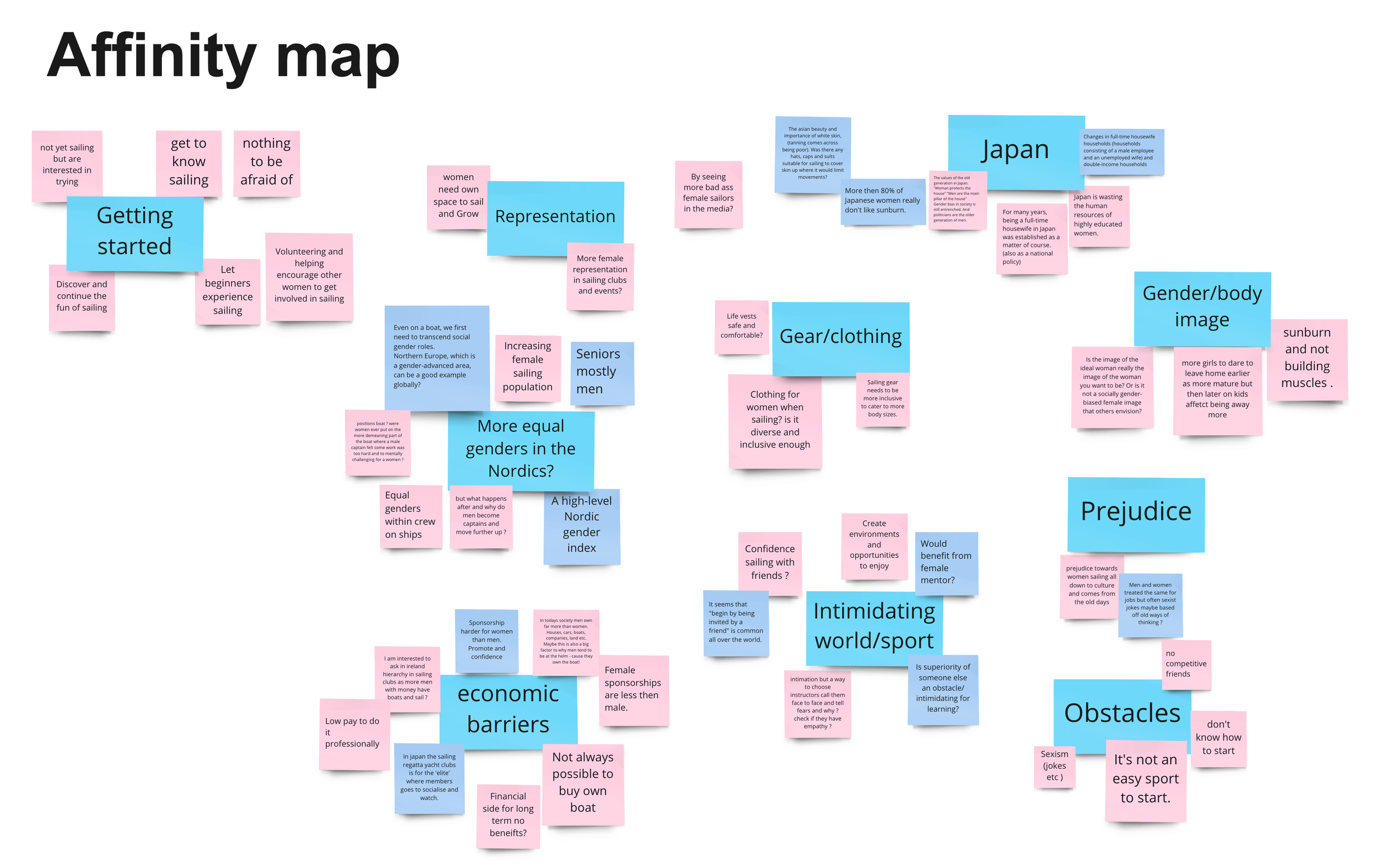
User InterviewsAfter an extensive research period during the ideation phase of the project we conducted user interviews to build personas, understanding, and inform our further decisions.
This phase was important in order to establish the core problem and needs that women face and to use that information to be able to identify a business drive.
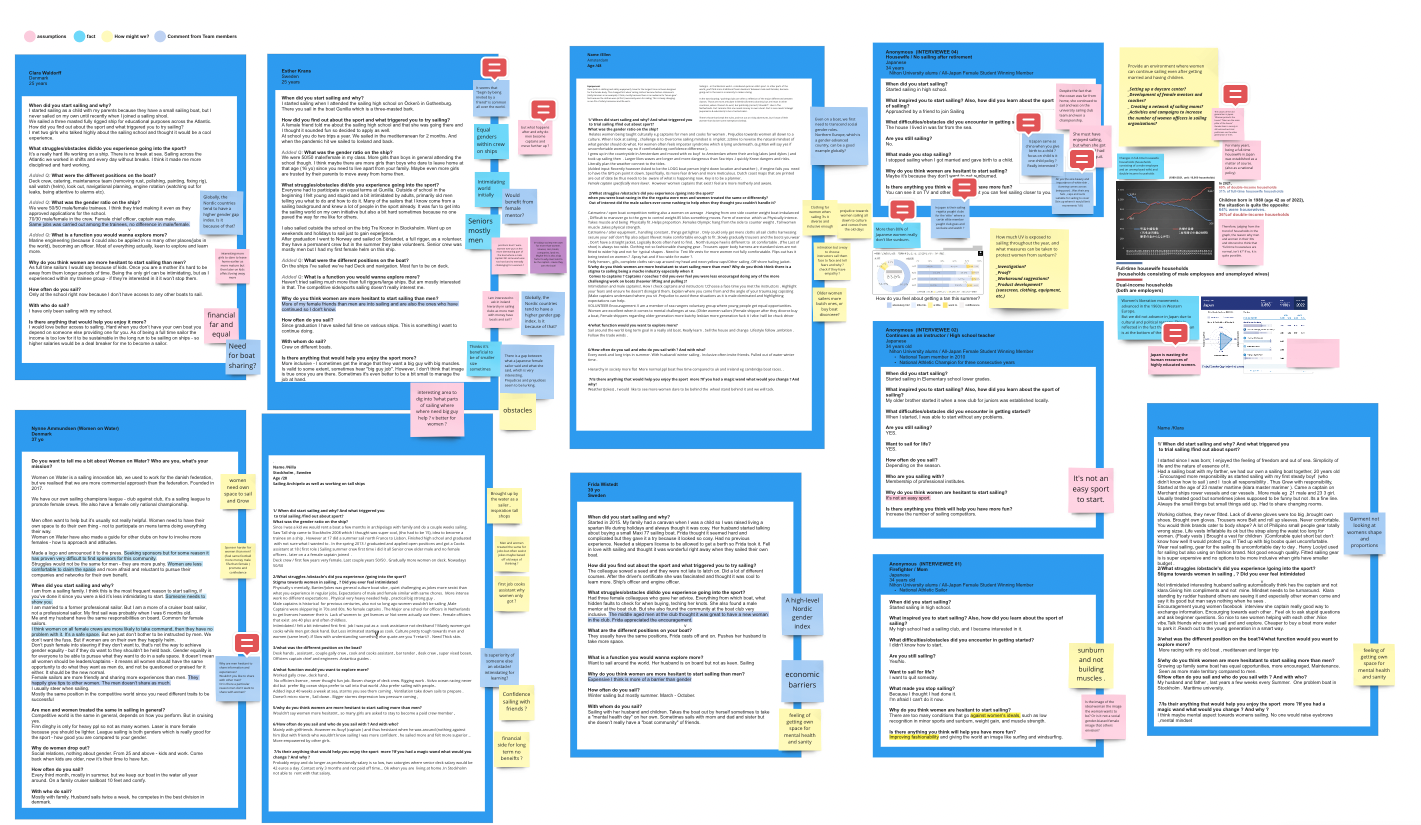
We prepared an interview script with 12 open ended questions aiming to achieve better understanding of the trends among women in sailing. We wanted to go broad and in 7 days we interviewed 3 leisure sailors from the Swedish facebook group “She Captain”, 2 sailors from Denmark, 1 from Ireland and 3 professional sailors sponsored by Helly Hansen in Japan.
During the research and ideation phase, the quotes that we came across and that stuck with us most were an important source to understand the greater picture and what common problems and struggles women have daily.
We found patterns, but also irregularities, across the globe and learned that local social structures play a key role.
Expert Interviews & insights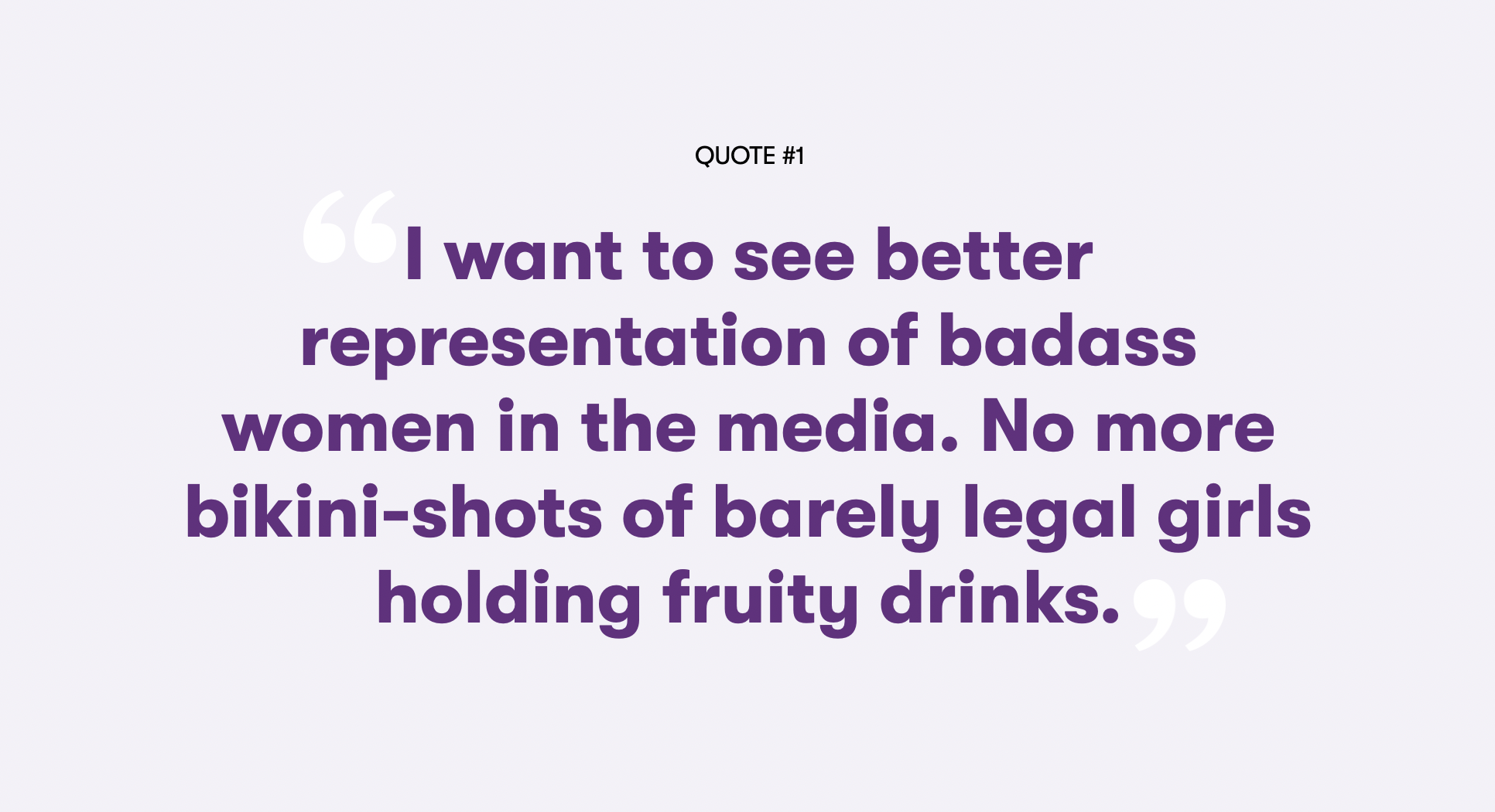
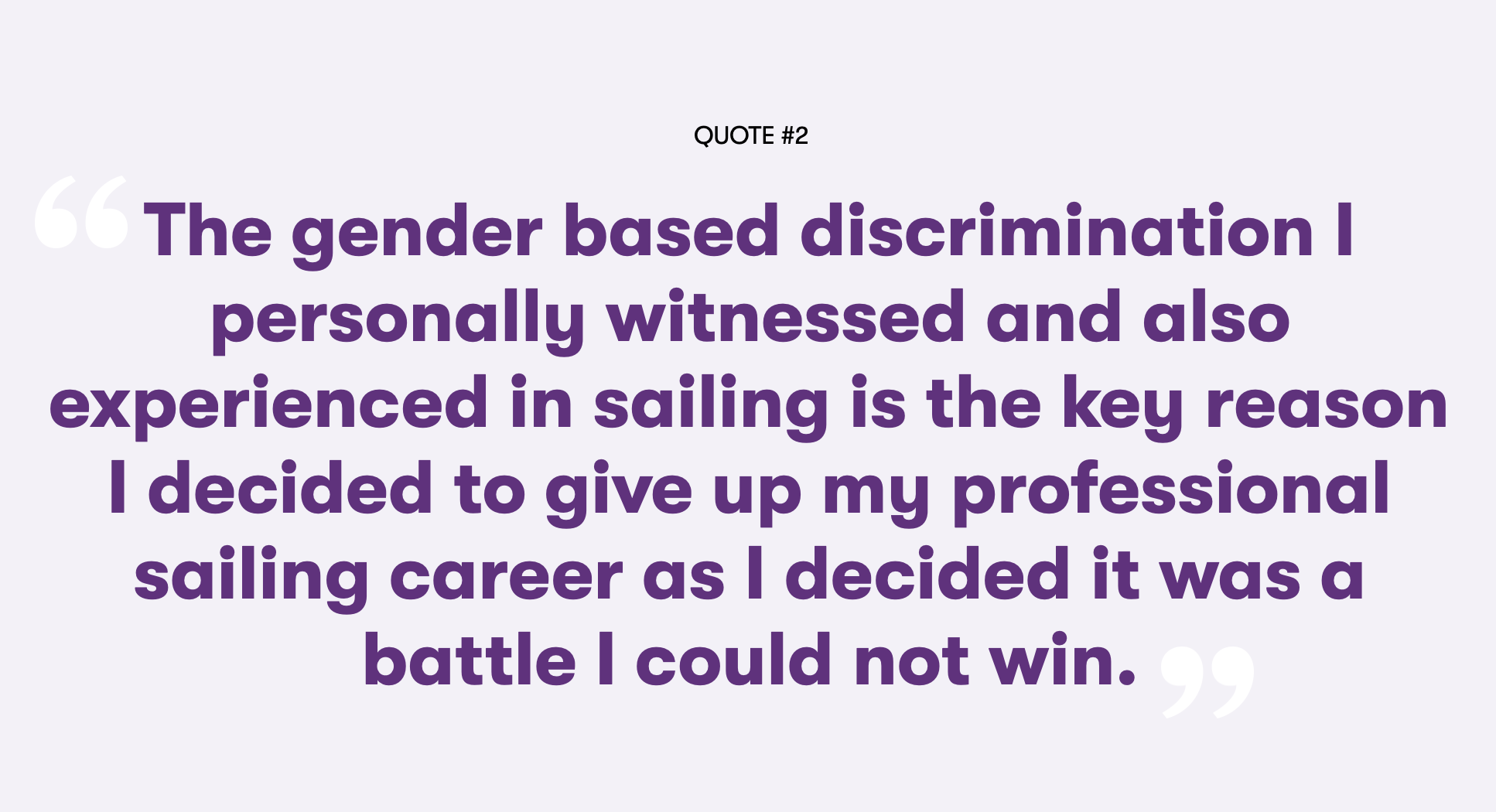
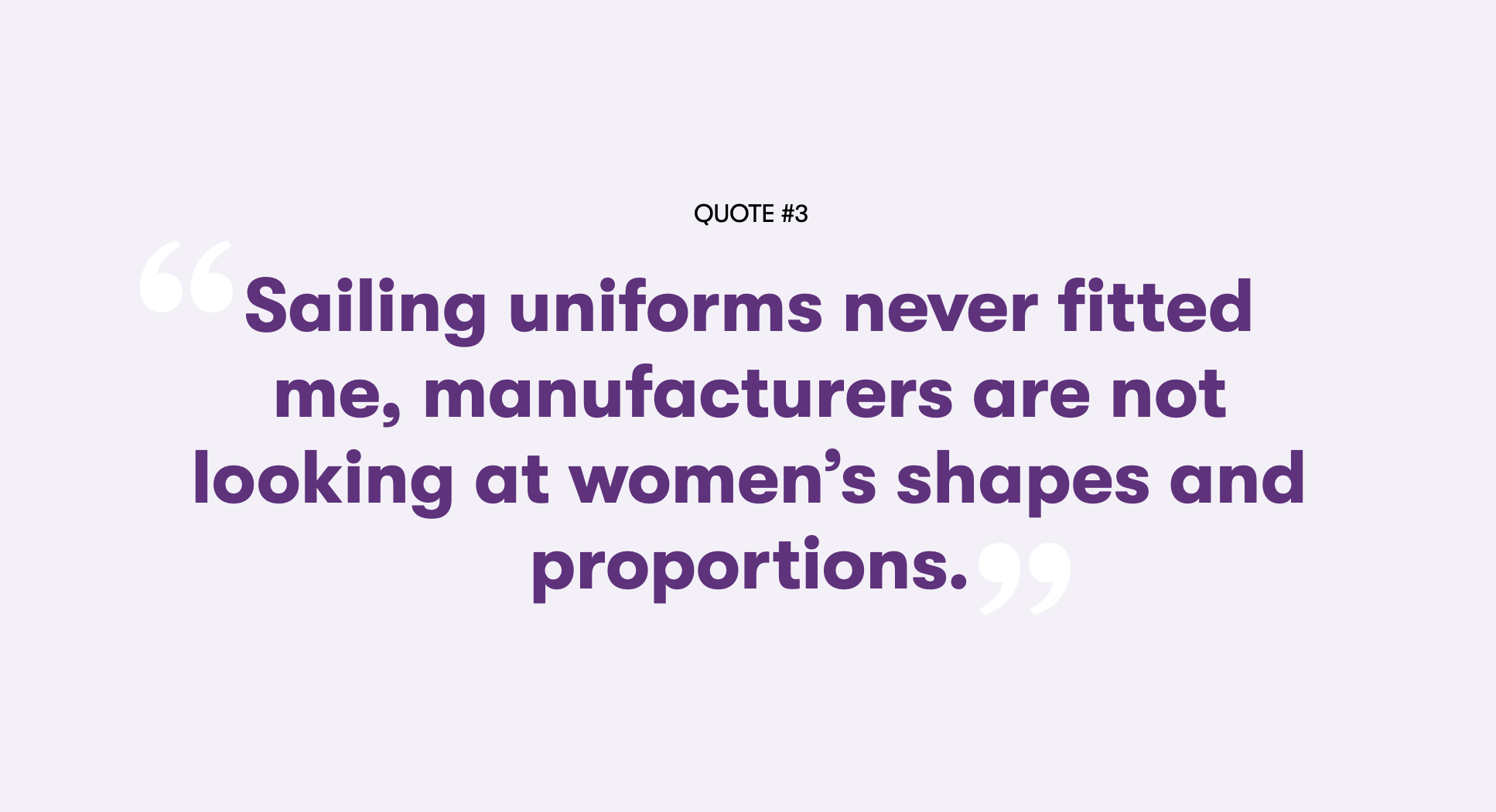
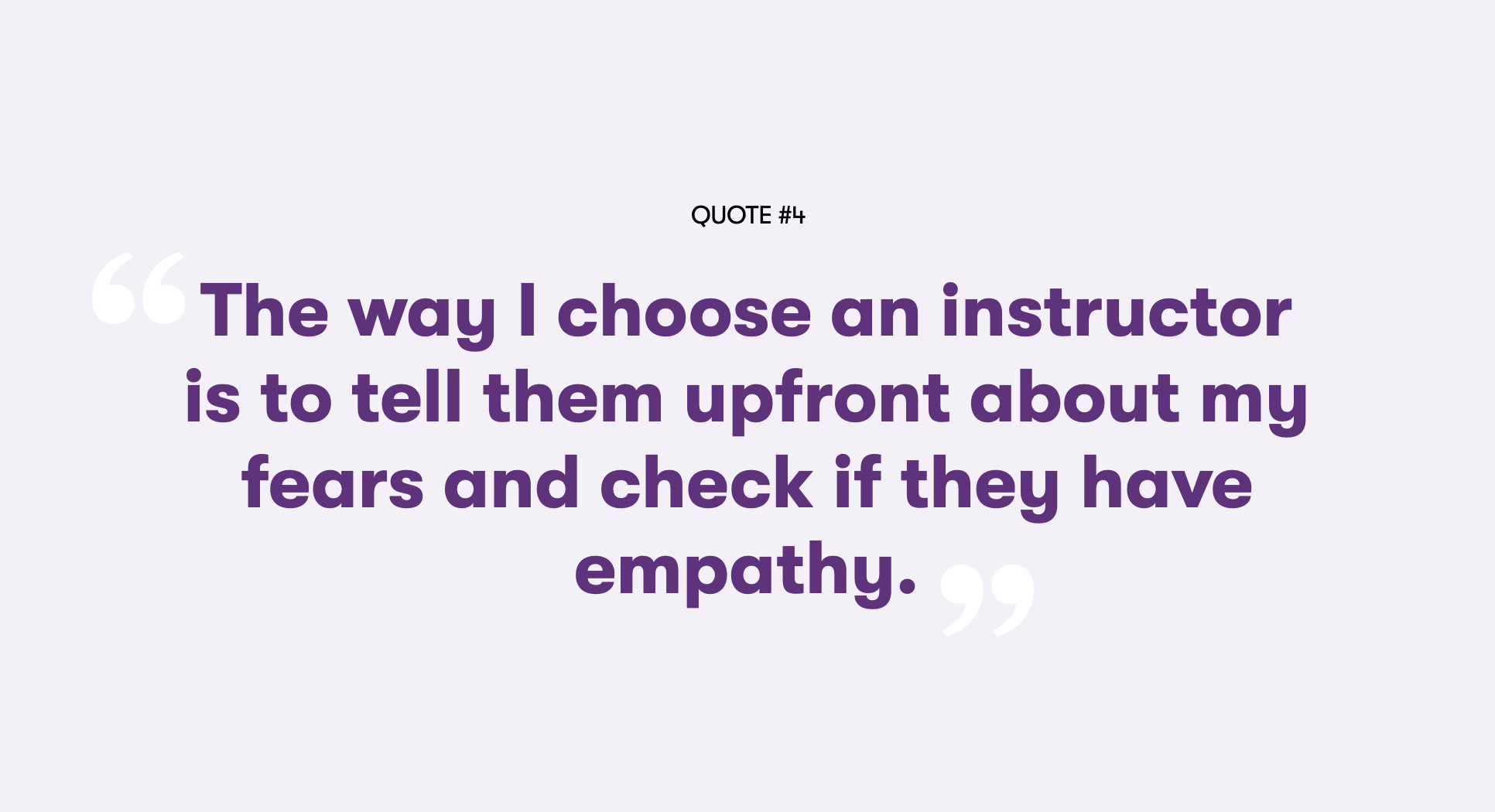
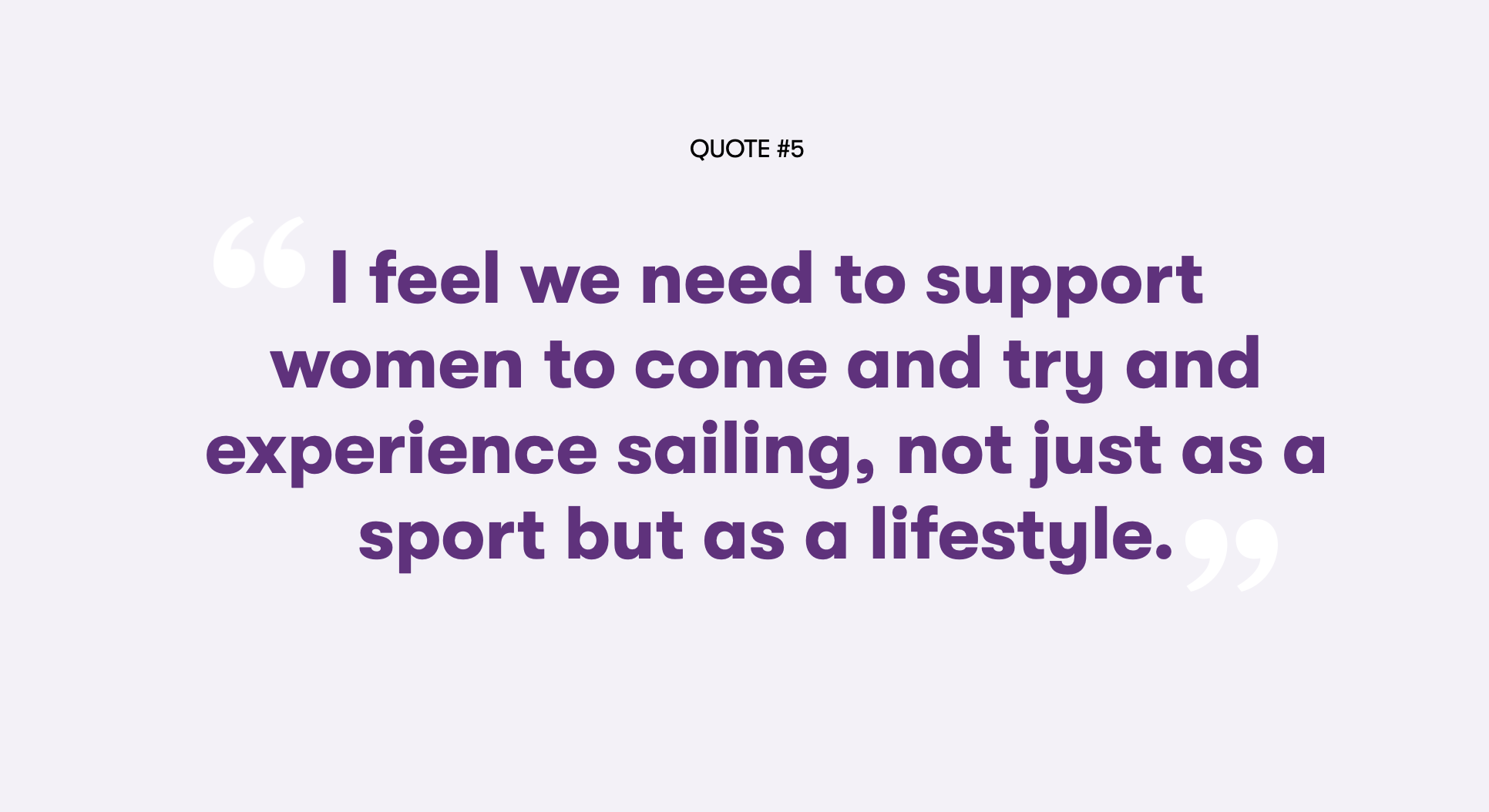
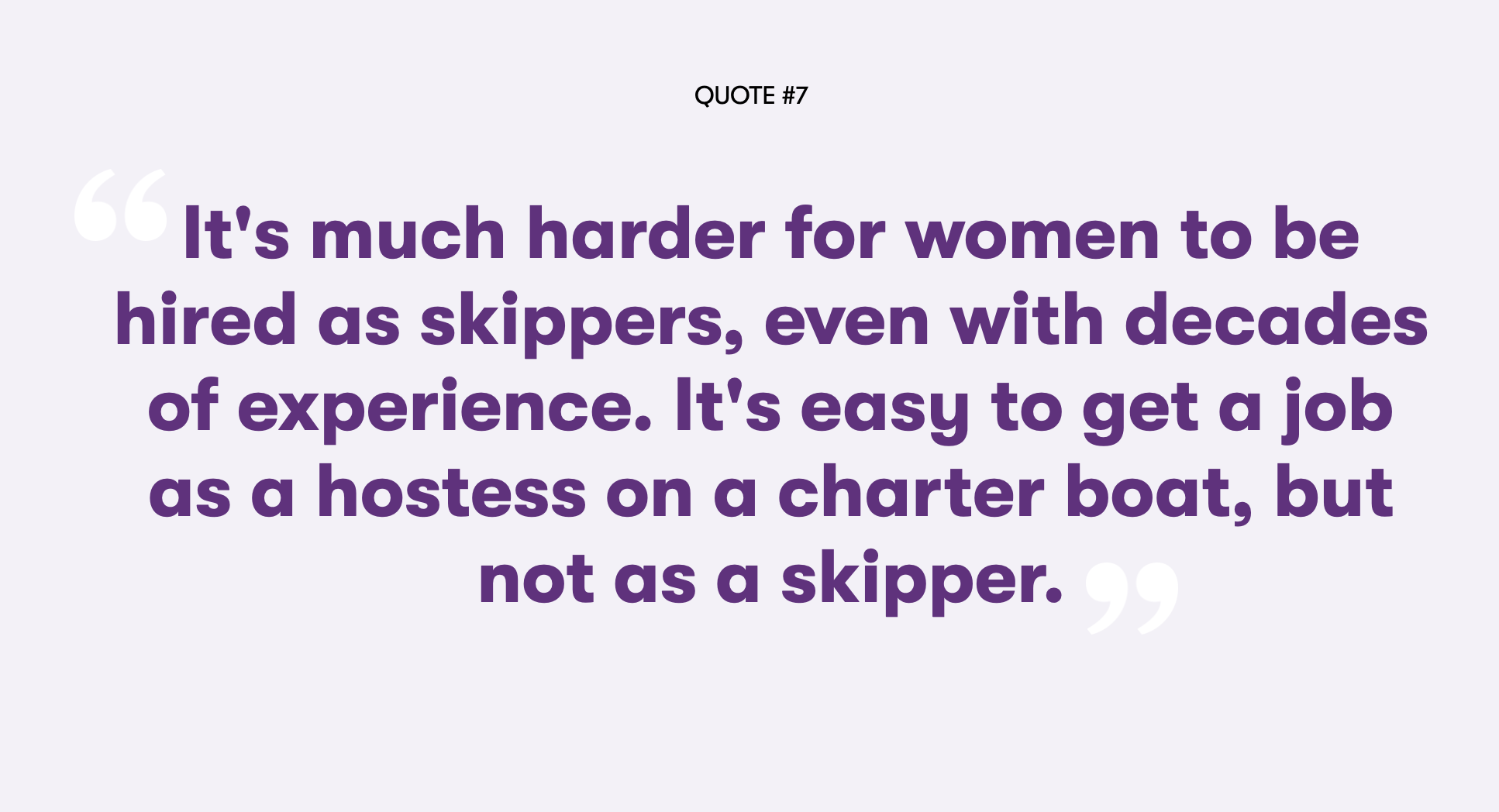
In our interviews we discovered that the issues women face within the sailing community varies greatly over our globe – although they do have a few things in common. With these insights we ideated in a few “Crazy 8 sessions” and came up with a few ideas that could potentially solve the problems that our women faced.
How might we…
— Help women get started in sailing
— Encourage women to sail
— Help women afford sailing
— Help women feel safe while sailing
In these sessions we came up with 5 proposition solutions. To test our propositions we interviewed 2 topic experts to see what they thought would be the most influential and successful idea out of the 5.
— Mentorship program for women
— All female boat sharing club
— Apparel rental
— All female sailing events
— All female sailing courses
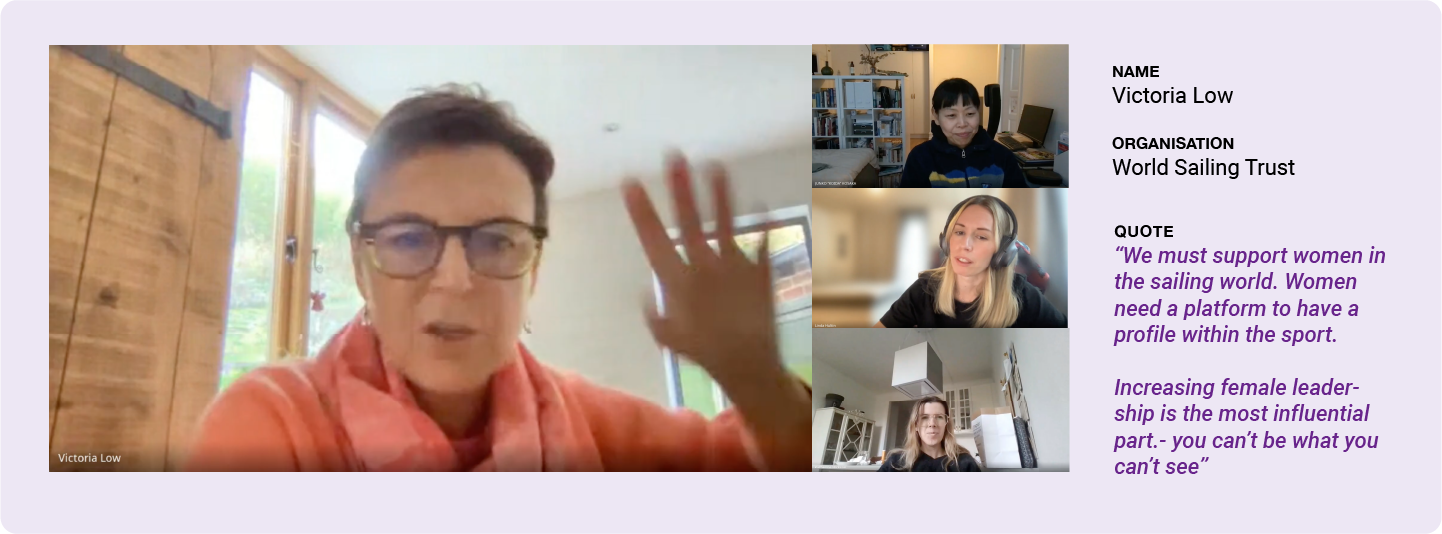
Both our topic experts emphasised the meaning of female leaders and role models in the sport. Inspiring people can motivate people to create change. But our interviewed women highlighted the importance of supporting women in sailing as they need a profile within the sport and their agenda needs to be heard.
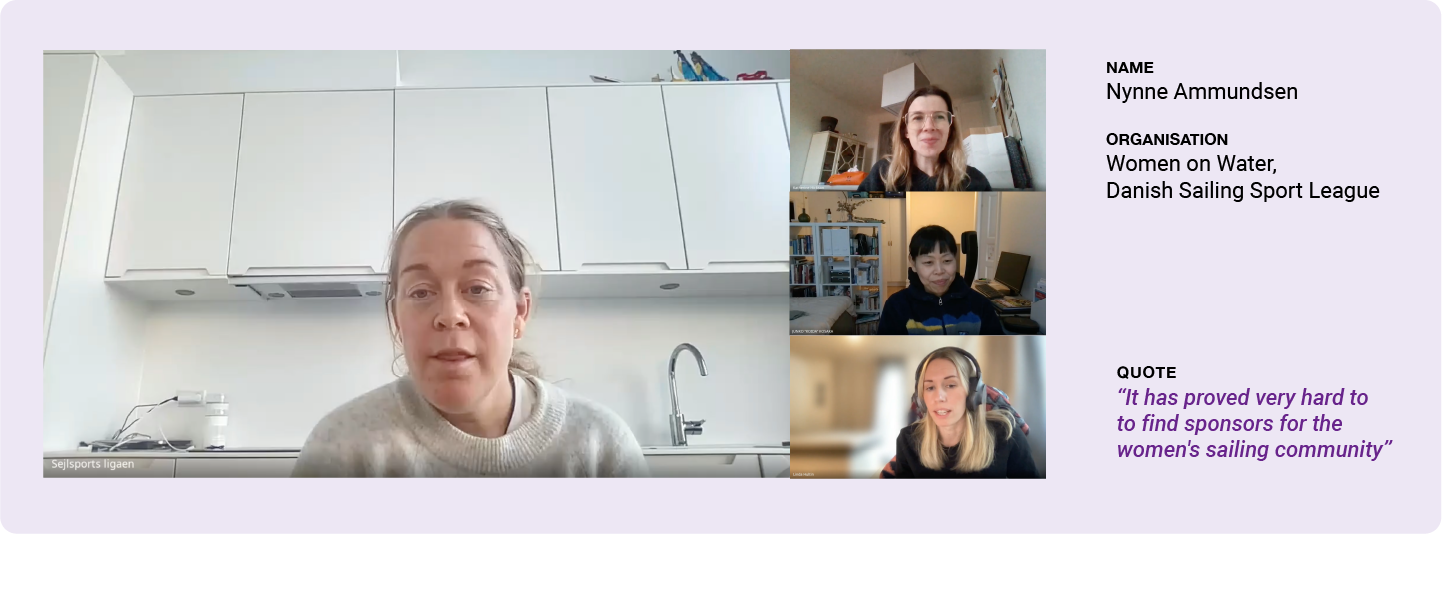
Nynne Ammundsen from Women on Water also mentioned the benefit of women creating their own platforms to meet other like minded women to motivate each other. From Women on Water’s 10 steps approach on how to work towards more gender equality, the most successful/important step has yet proved to be linked to the social aspects/relationships challenges on shore and off shore.
After conducting these expert interviews the topic we felt most passionate to pursue was female mentorship in sailing. We felt confident that this was an ideal solution to tackle many of the issues women face in a successful way.
Research shows that while the benefits of mentoring are often thought of and reported for the mentees only, they are not the only ones who learn and grow through mentorship; in fact, the benefits of mentoring are significant for everyone involved.
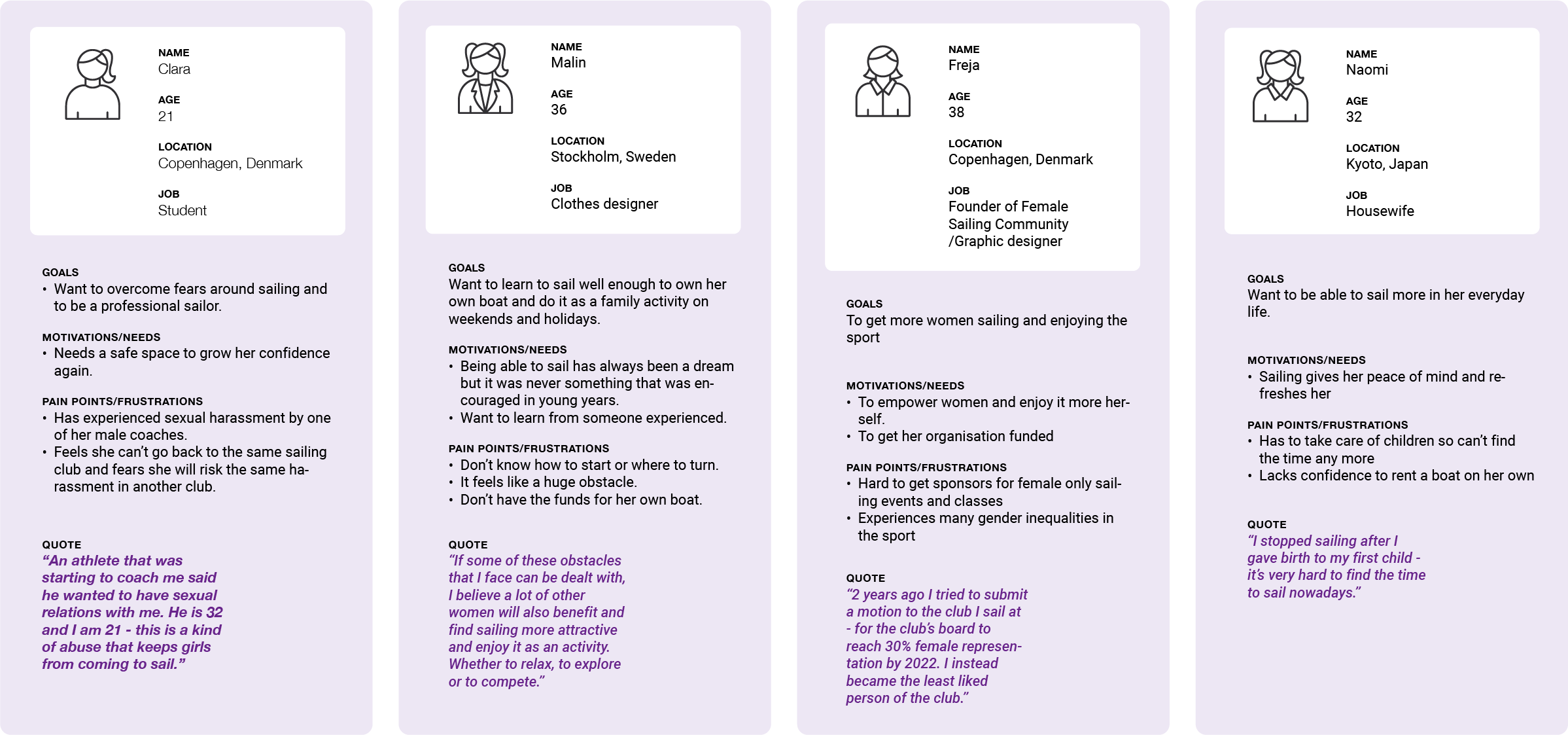
Personas
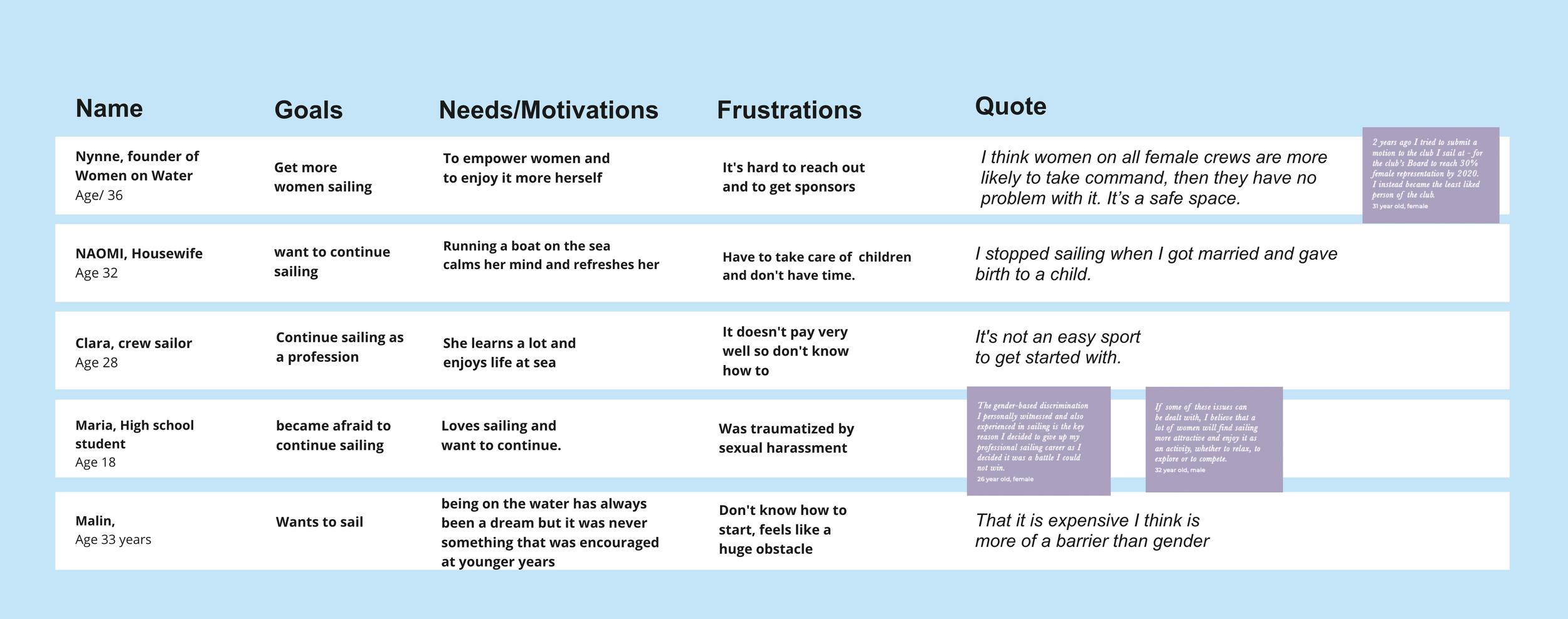
Before we started sketching and wireframing we wanted to make sure we were on the right track and form a deeper understanding of our users' goals, needs, experiences, and behaviours. So, we created 4 personas to represent each of our user segments. They were based on user interviews and we kept updating them throughout the project as we gathered more data.
We iterated our ideas based on these personas to be able to make sure that our service can drive business and be profitable. We also used these personas whenever we wanted to step out of ourselves and reconsider our initial ideas and assumptions.
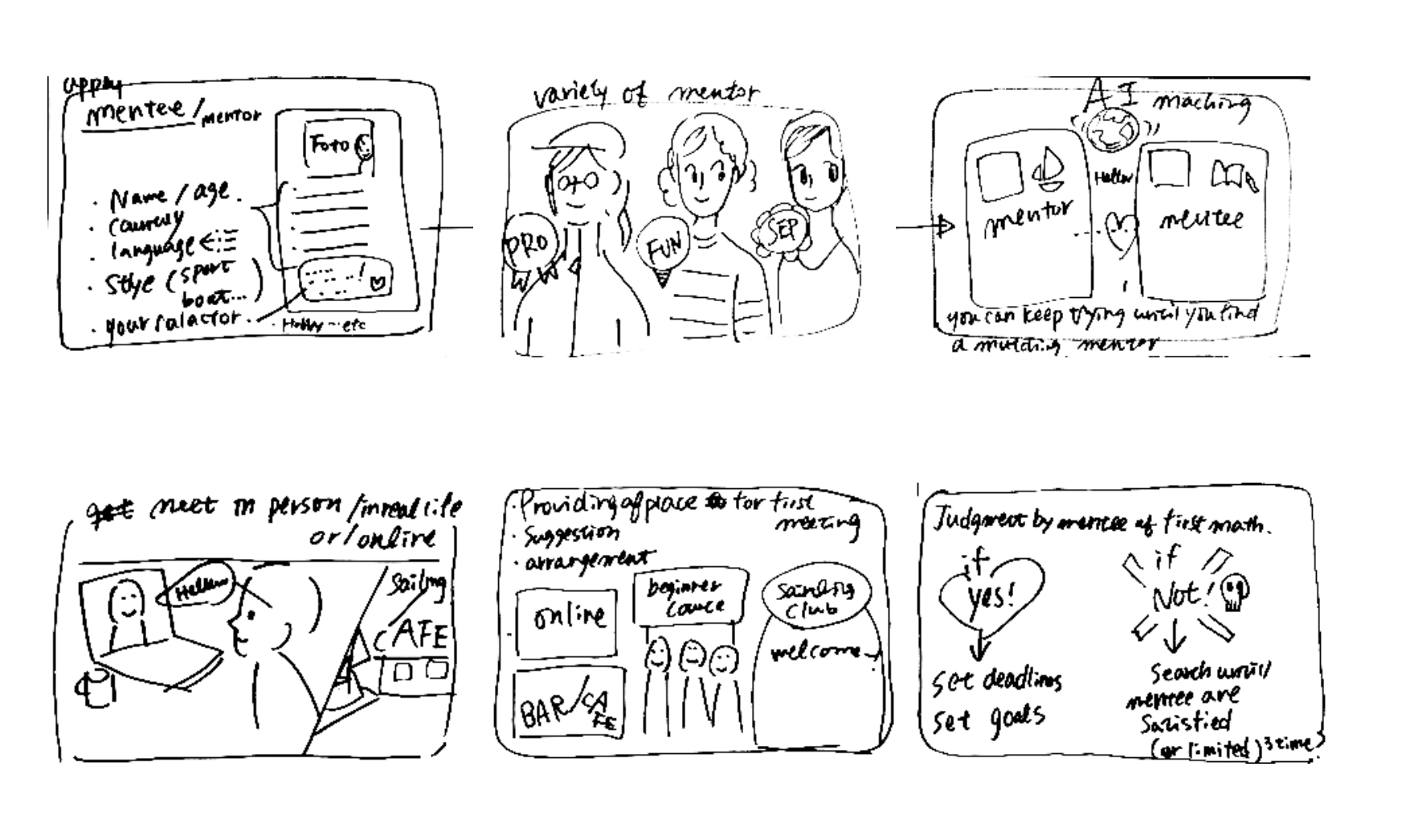
Sketches & Wireframes
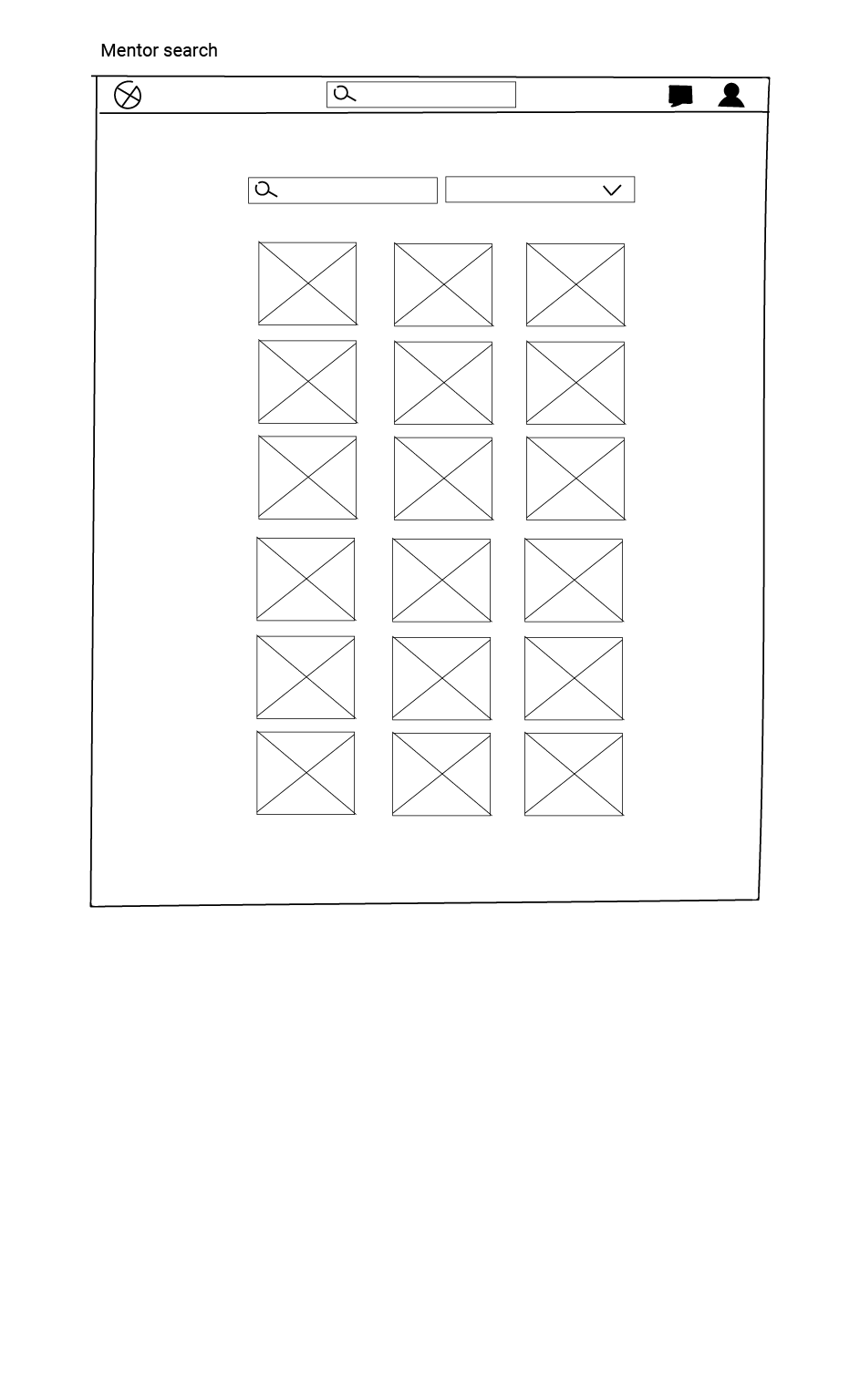
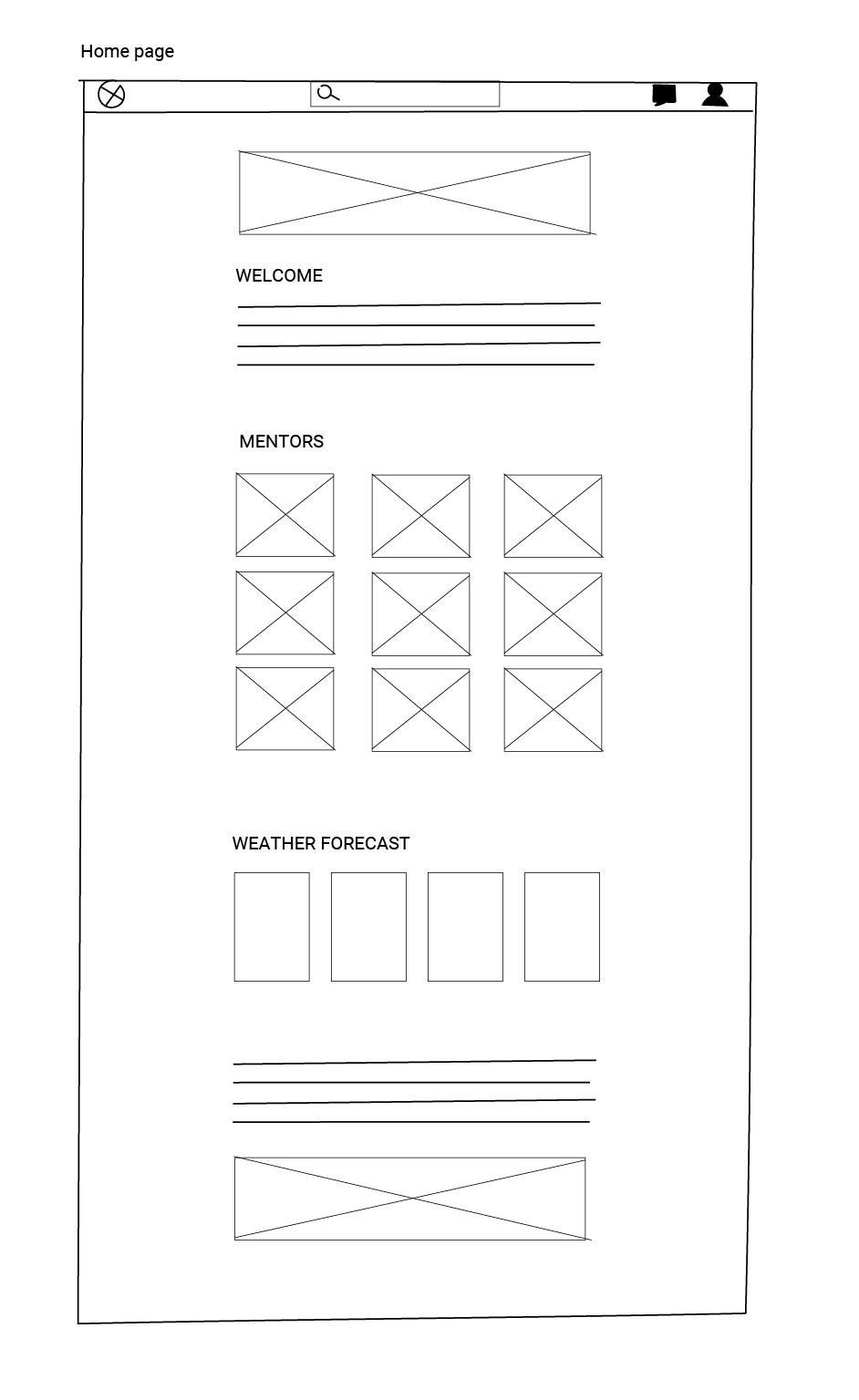
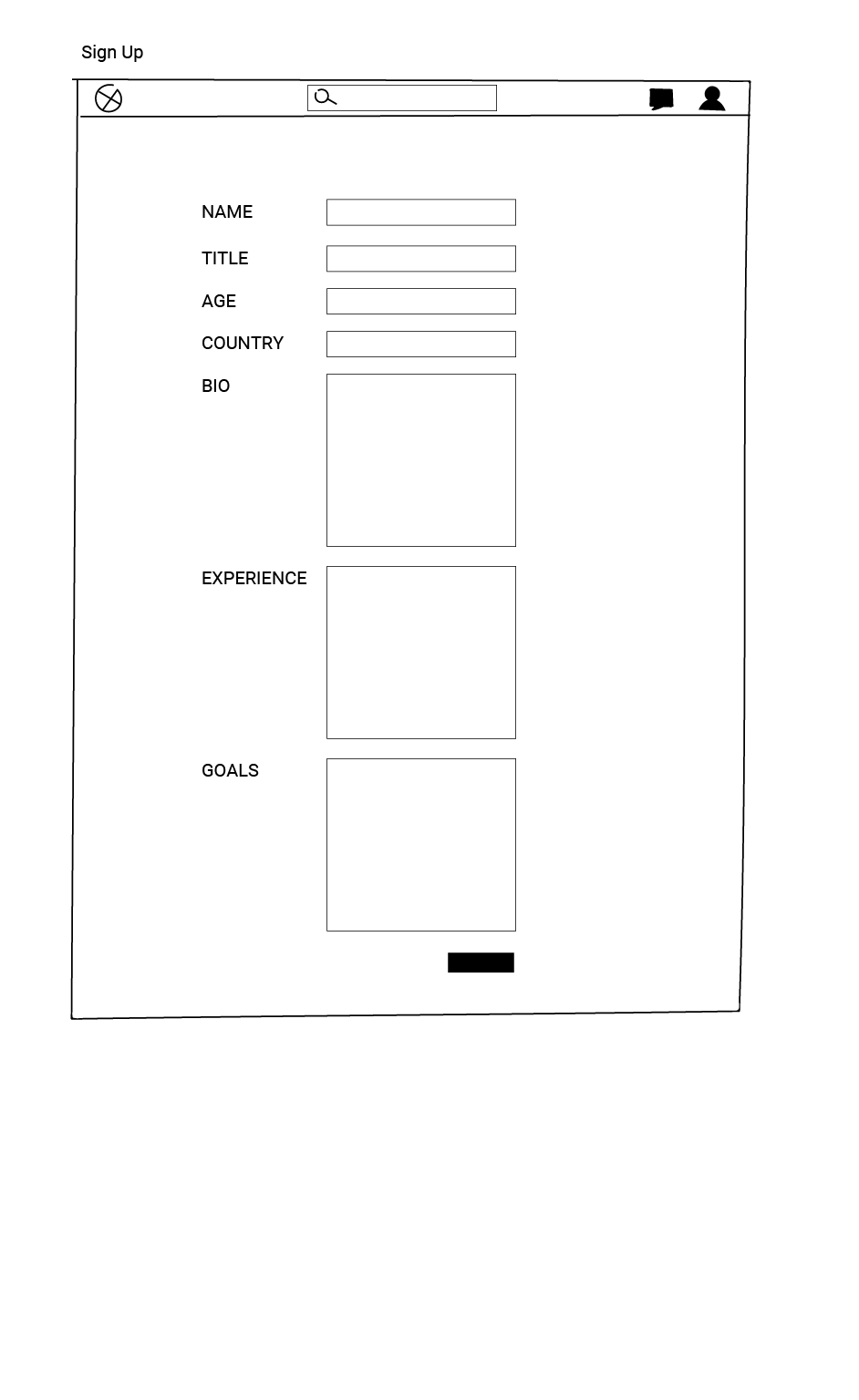
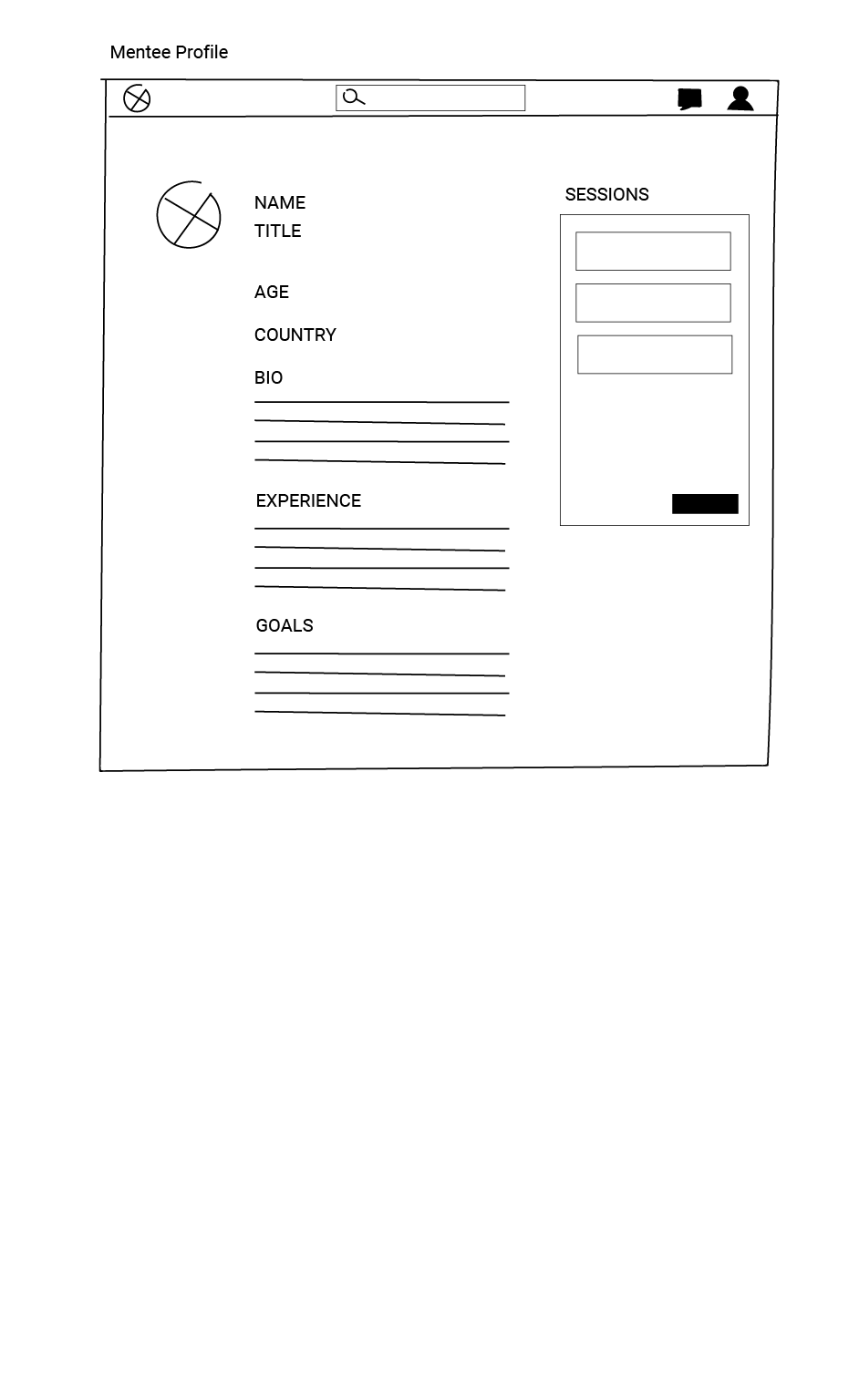
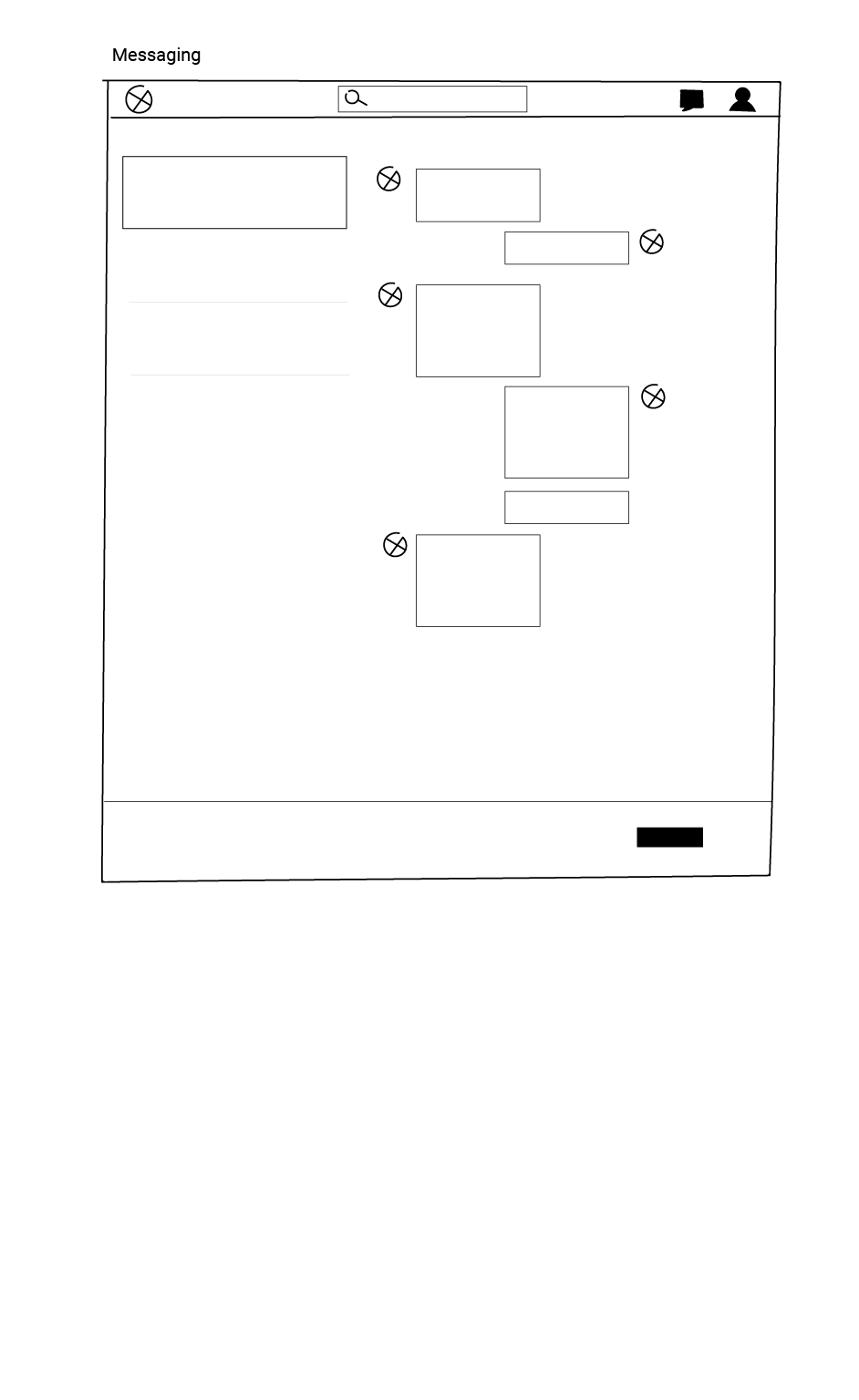
After initial first sketches of defining the user flow, we used Figma to translate them into lo-fi wireframes to build a better understanding of how users would interact with our service and to discover opportunities for improvement.
At this stage the wireframes were defined enough for some user testing. Based on 4 tests, we made alterations and moved on to creating high fidelity prototypes.
Usability Testing
After wire framing and ideating together in the team I created a fully-functional, high-fidelity prototype of the new flows using Figma. At the same time, we started recruiting subjects for the test who fit our criteria. We did 4 usability tests in the first round and 3 after iterating on the issues that we identified:
01
Some of our users reminded us that the women we design for want to feel safe while sailing. It can be intimidating joining someone you don’t know on a boat. To address this we implemented public mentee reviews and skill levels for our mentors. We also thought of the idea to enable mentorship digitally.
02
Our account set up was perceived overwhelming when all of the information asked for was displayed on the same screen. We eliminated this by dividing the process into 5 simplified steps, with a clear indication of where the user is in the sign-up process.
03
The offer was not clear enough, we needed to clarify what our service was for, who should sign up, and what to expect to get out of it. We needed to clarify CTAs, simplify and work on the visual hierarchy to create a more engaging experience.
04
Users experienced difficulties navigating back and forth on the site. We added back-steps and designed according to a well established conceptual model of a modern website.
Design Decisions
Once the usability issues were resolved, I moved on to design the prototype in Figma and to create a visual identity that’s aligned with the services values and message. I researched similar services and took a deep dive into my catalog of references for inspiration.
We settled for a modern visual style with large marine images and contrasting text to attract a young-minded and tech-savvy woman on our inspirational parts of the service. For the more information heavy parts of our service we decided to go for a lighter visual appearance.
UI Design
The design system is based on user-centered design principles and set up to show good practice in design for great user experience. They are intended to provide clear instructions to developers on how to adopt specific principles, such as intuitiveness, learnability, efficiency, and consistency.
Following the guidelines of Googles Material design and a well established conceptual model give a sense of consistency for users. Also, we liked that it has three-dimensional qualities that are reflected in its use of surfaces, depth and shadows, and the fact that developers can control the element’s altitude and projection by one single value.
To align our appearance to our purpose, the dominant colour pairing is purple and dark grey:
The dark grey represents the neutrality, strength and pragmatism.
The purple represents the feminine creativity, energy and innovation that drives our women.
The way these two colours work harmoniously together represents our thinking and symbolises the postive energy of our service.
Dark grey and purple are supported by tones of the same colours to help draw attention to important information and communicate clearly. This is useful in UI and online applications.
Our icons are an important complement to our visual identity and help us create recognition in our communication.
Roboto is our chosen font family. It’s a modern, bold font, often used in digital products which communicates a sense of recognition for the user.
We use two weights of Roboto:
Regular and Regular Italic
Bold and Bold Italic
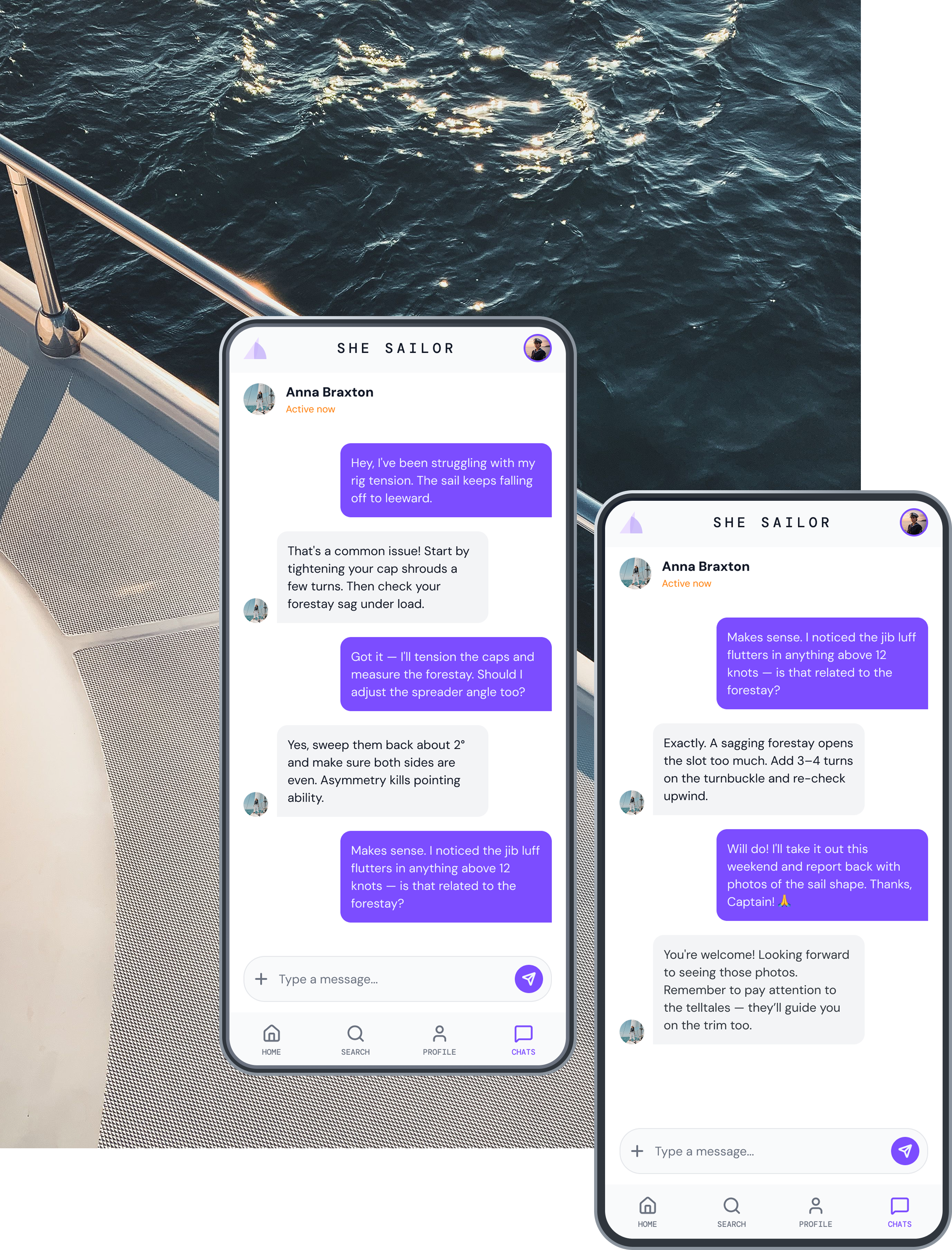
Prototype
An important part of the service is to help women feel safe so we have emphasized on features to ensure that our mentors experience shows in their profile and that they are also publicly reviewed. Mentees can therefore see reviews from previously carried out sessions, and you can see the mentors experience levels of their chosen topics. These will vary from mentor to mentor based on their experience.
You will also see a short overview of the mentor.
The prototype would continually be tested and iterated accordingly over time to fit user needs before a public launch would come into question.
Learnings & insights
During this project I learned never to assume what is the right path until you conduct the journey of research and collaboration. It's exciting when guesses and assumptions you've been carrying are overturned in the process of gaining insight.
I gained a good understanding of the research process and its importance in designing user-centric products.
Conducting user research is crucial for creating a successful UX design. It helps designers to understand the users' needs, goals, and pain points, which in turn helps in creating user-centered design solutions.
My three key insights:
Collaboration is key
Collaboration between team members and stakeholders is crucial for creating effective and successful UX designs. It helps in aligning everyone's goals and objectives and ensures that the design meets the user's needs. We learned that as we spoke to our topic experts.Usability testing is a necessity
A necessary to evaluate the effectiveness and usability of the design. It helps designers to identify usability issues and areas of improvement, which in turn helps to create a better user experience. This became clear after conducting our first tests and identifying our first issues.Iteration is essential
Design is an iterative process, and designers should be willing to iterate and improve their designs based on feedback and testing results. This helps in creating designs that are user-friendly, effective, and meet the user's needs.